weihuidan@jinansilkpet.com WhatsApp +86 135 8907 1779
OEM Formula Guide

Cat Litter Odor Control Additives: Activated Carbon, Zeolite, Baking Soda or Fragrance? A Private-Label Buyer’s Guide

By Lisa Wei, Export Director, Jinan Silk Pet · August 2026 · 12 min read
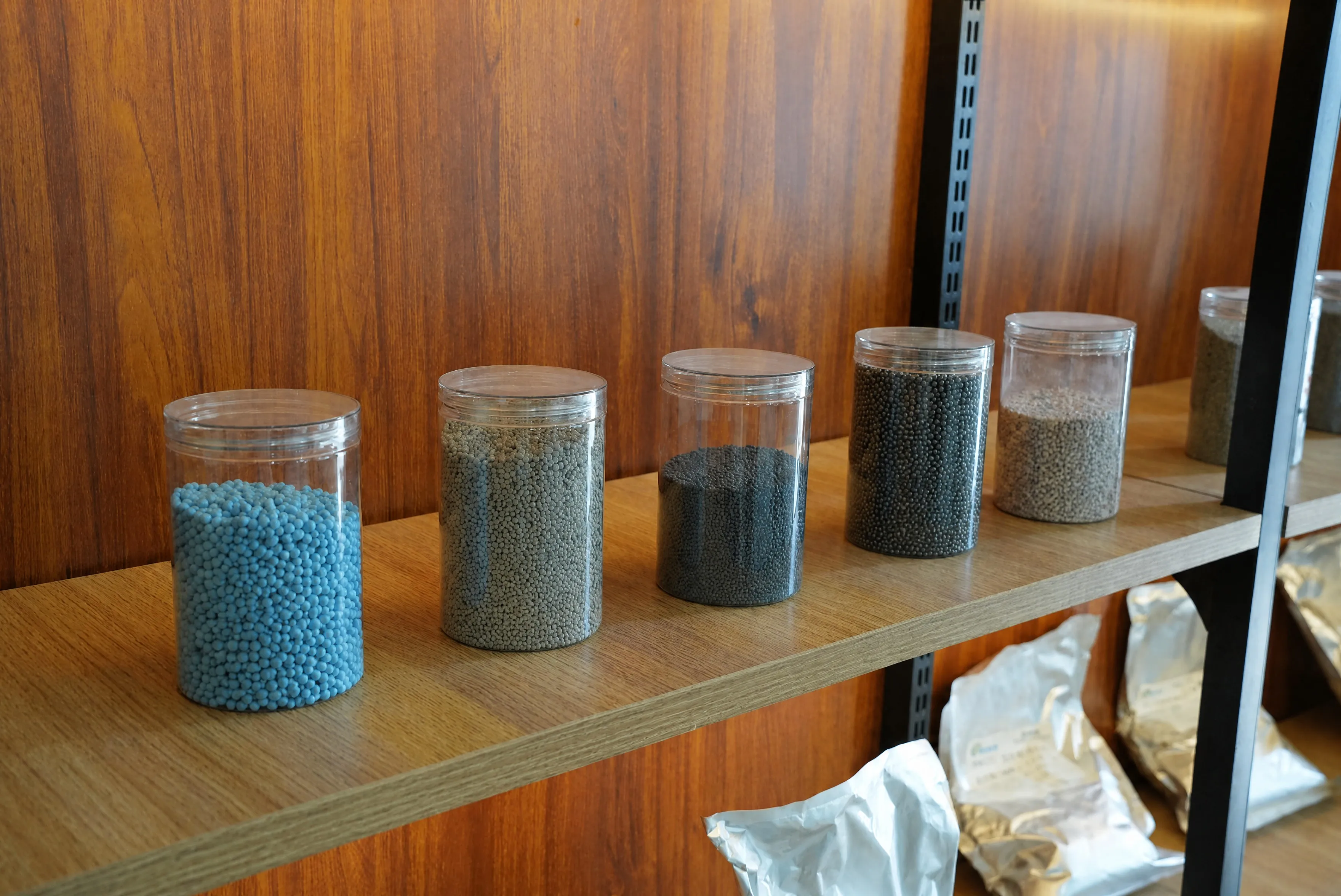
Odor control additive granules for cat litter - activated carbon, mineral granules and polymer beads in sample jars

Who this is for: Private-label brand owners, importers and distributors who need to decide — or defend — what goes inside the bag. If your competitor’s SKU says “activated carbon” and yours says “baking soda”, this guide tells you which one actually wins in your market, and what to demand from the factory before you sign the formula.

“Odor control” is the most printed claim on cat litter packaging — and the least understood. A decade of batch testing on the manufacturing side has shown us one pattern: most buyers compare marketing language (“strong scent”, “long-lasting”) instead of mechanism (what the additive actually does to the odor molecule). That mistake is expensive, because the wrong additive system is the difference between a SKU that sells on smell perception and one that genuinely solves the ammonia problem — and gets the repeat purchase.

Quick answer: elimination, adsorption and masking are not the same thing.

Elimination changes the odor molecule chemically (baking soda neutralizing ammonia).
Adsorption traps the odor molecule physically (activated carbon, zeolite, fiber pores).
Masking overlays a stronger smell (fragrance, microcapsules).
Suppression reduces the odor source (antibacterial agents slowing bacteria that produce VOCs).

Only elimination and adsorption reduce what is actually in the air. Masking changes what you smell — and stops working the moment the fragrance degrades. A well-designed private label formula layers all four; a cheap one relies on the fourth alone.

⚠ Honesty note on duration: You will not find a “7 days” or “30 days” claim in this guide, and you should treat one on a competitor’s packaging with suspicion. Odor-control duration depends on additive dosage, base material, granule size, moisture content, number of cats, scooping frequency, ambient temperature, humidity and the test method used. The honest answer is: verify per batch, with the method stated. The section below on RFQ test fields shows exactly what to ask for.

Where Litter-Box Odor Actually Comes From

Before choosing additives, know the enemy. Litter-box odor is not one smell — it is a mix of compounds with different sources and different removal routes:

Each additive targets a different part of this mix. That is why “which one is best” is the wrong question — the right question is “which combination matches my base material and my market’s expectations.”

The Four Mechanisms, Compared

MechanismExample AdditivesWhat It DoesRelative LifespanEliminate or Mask?
Physical adsorptionActivated carbon, zeolite, fiber/porous granulesTraps odor molecules in pores or mineral latticesLong — until pores saturate, then replaced with the litterEliminate (from the air)
Chemical neutralizationBaking soda (sodium bicarbonate)Buffers pH, neutralizes volatile ammoniaShort to medium — consumed as it reacts, needs renewalEliminate (chemically)
AntimicrobialSilver-ion / nano-silver treated granulesSlows odor-producing bacteria at the sourceMedium — surface-bound, persists until replacedSuppress (source)
Fragrance maskingScent oils, micro-encapsulated fragranceOverlays a stronger, pleasant smellShort — hours to days of perceptible scentMask (perception)

Two practical implications for buyers: first, if fragrance is your only odor-control mechanism, the ammonia problem is still there — you just cannot smell it yet. Second, the two “eliminate” mechanisms are consumable: they work until saturated or neutralized, which is exactly why the honest unit of measurement is batch-tested performance under stated conditions, not a shelf-life promise.

Ingredient by Ingredient

Below, each common additive — what it does, where it works, where it does not, and how to specify it in an OEM context. The photos show the raw materials exactly as we sample them for formula development.

Activated Carbon — the ammonia workhorse

Activated carbon adsorbs a broad range of odor molecules — ammonia, sulfur compounds and organic VOCs — into an enormous internal pore surface. It is the closest thing to a “set and forget” additive: it needs no renewal mid-bag, works until saturated, and is replaced with the litter change. Its two practical limitations: it adds cost per kilo, and it can dilute clumping strength if blended at too high a ratio into a clumping base.

OEM specification points: particle size matched to your base granule (2–4 mm works in most clumping formulas), blend ratio (typically 5–20% of the mix), and whether the carbon is coconut-shell, coal or wood-based — each has different pore characteristics and a different visual (the black-and-white contrast of carbon in a light base is itself a strong e-commerce selling point).

Zeolite — the mineral ammonia exchanger

Zeolite (clinoptilolite is the common pet-industry grade) removes ammonia by a different route: ion exchange, where ammonium ions are captured in the mineral lattice, plus physical adsorption in its honeycomb pores. Veterinary literature documents its ammonia-removal capacity in litter products (see the NIH study on felinine-derived malodor control), and it is a standard component of premium mineral and mixed formulas. Like activated carbon it is long-acting and replaced with the litter — and the two are commonly combined, since zeolite targets ammonia specifically while carbon catches the broader VOC range.

Baking Soda — fast neutralizer, supporting role

Sodium bicarbonate is the fastest-acting chemical neutralizer — it buffers pH and neutralizes volatile ammonia on contact. That speed is exactly why it has a supporting role, not a starring one: it is consumed as it reacts, so its benefit decays within the life of the bag. Two legitimate uses: baked into the formula at low dosage as a first-response layer, or positioned as a “sprinkle during scooping” companion product (the Arm & Hammer deodorizer model). If a supplier presents baking soda as a permanent, multi-week solution, that is a red flag — ask for the batch test.

Fragrance & Microcapsules — retail perception, not elimination

Fragrance masks; it does not eliminate. Its legitimate jobs: first-sniff retail appeal, masking transient smells between scoopings, and brand identity (green tea, lavender, coffee and other profiles). Micro-encapsulated fragrance extends perceptible scent by releasing slowly, but even the best encapsulation degrades — and a scent that fades mid-bag is a return complaint if the formula has no real elimination layer underneath.

Trend signal for buyers: fragrance-free is the fastest-growing positioning in premium markets, driven by sensitive cats and allergy-aware owners. The winning premium formula increasingly is unscented base + adsorption layers — scent becomes the option, not the default.

Enzyme and bio-based additives — only with test data

Enzyme systems that break down urea and bacteria are real technology, and some suppliers market them aggressively. Our rule for buyers: do not pay the enzyme premium without the test protocol. Enzyme stability in a dry granule, under warehouse heat, is the hard part — demand the batch COA with method and storage conditions, or treat the claim as marketing. (We can engineer enzyme and silver-ion systems into a formula for you, but we will show you the same test data before you pay for them.)
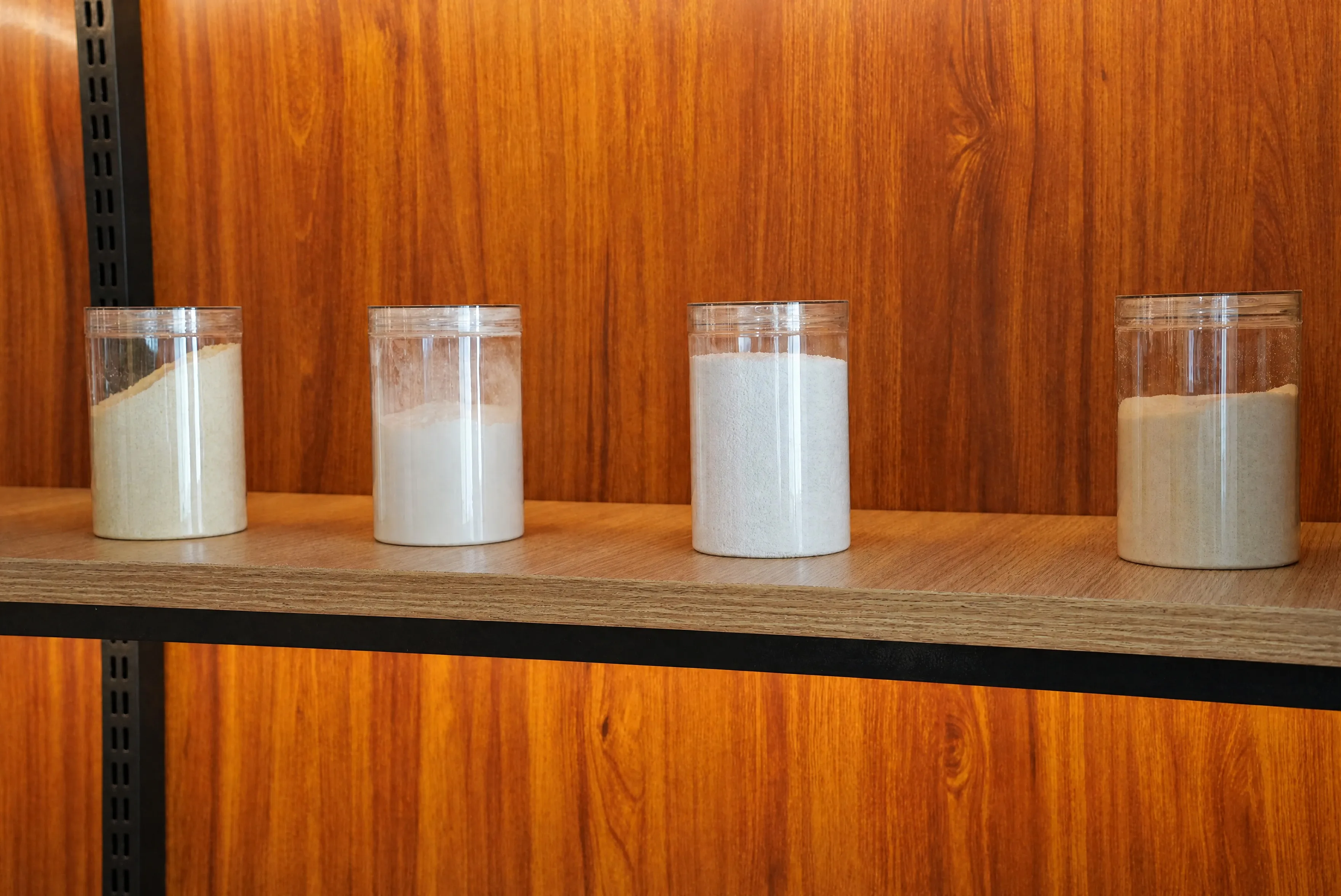
Cat litter formula raw materials - corn flour, guar gum, baking soda and soybean fiber in sample jars

Which Additive Fits Which Base Material

The base material determines what an additive can and cannot do. A formula that works on bentonite can fail on tofu, and vice versa. This is the table we actually use when a client says “give me an odor-control formula”:

Base MaterialRecommended Additive SystemWhyWatch Out For
Bentonite (clumping)Activated carbon granules + optional fragrance; zeolite for ammonia-heavy multi-cat householdsHard clumping tolerates granular additives; carbon adds a premium visual contrastKeep carbon ratio low enough to preserve clump hardness; test clump strength after blending
Tofu (plant-based)Baking soda infusion + micro-encapsulated fragrance; unscented option for eco channelsPorous fiber already adsorbs; soda adds a chemical first-response layerPlant bases absorb moisture — confirm additive moisture spec does not raise bag humidity
Cassava (premium plant)Zeolite or activated carbon granules + optional pH-monitoring granules for the health lineHighest-absorption base pairs naturally with premium health positioningElectrostatic properties need processing control when mixing granules
Silica gel (crystal)Fragrance optional only; no adsorption granules inside the crystal massCrystals already absorb and lock odor; 2–4 week bag life is the storyAdded granules take space from crystal volume and hurt the cost-per-use math
Mixed / blendedFull layered system: carbon + zeolite + silver-ion + optional fragrance, engineered to target price pointBlend ratio is your proprietary formula — the strongest private-label moat in the categoryEvery component needs its own COA line; blend stability must be QC-checked batch to batch
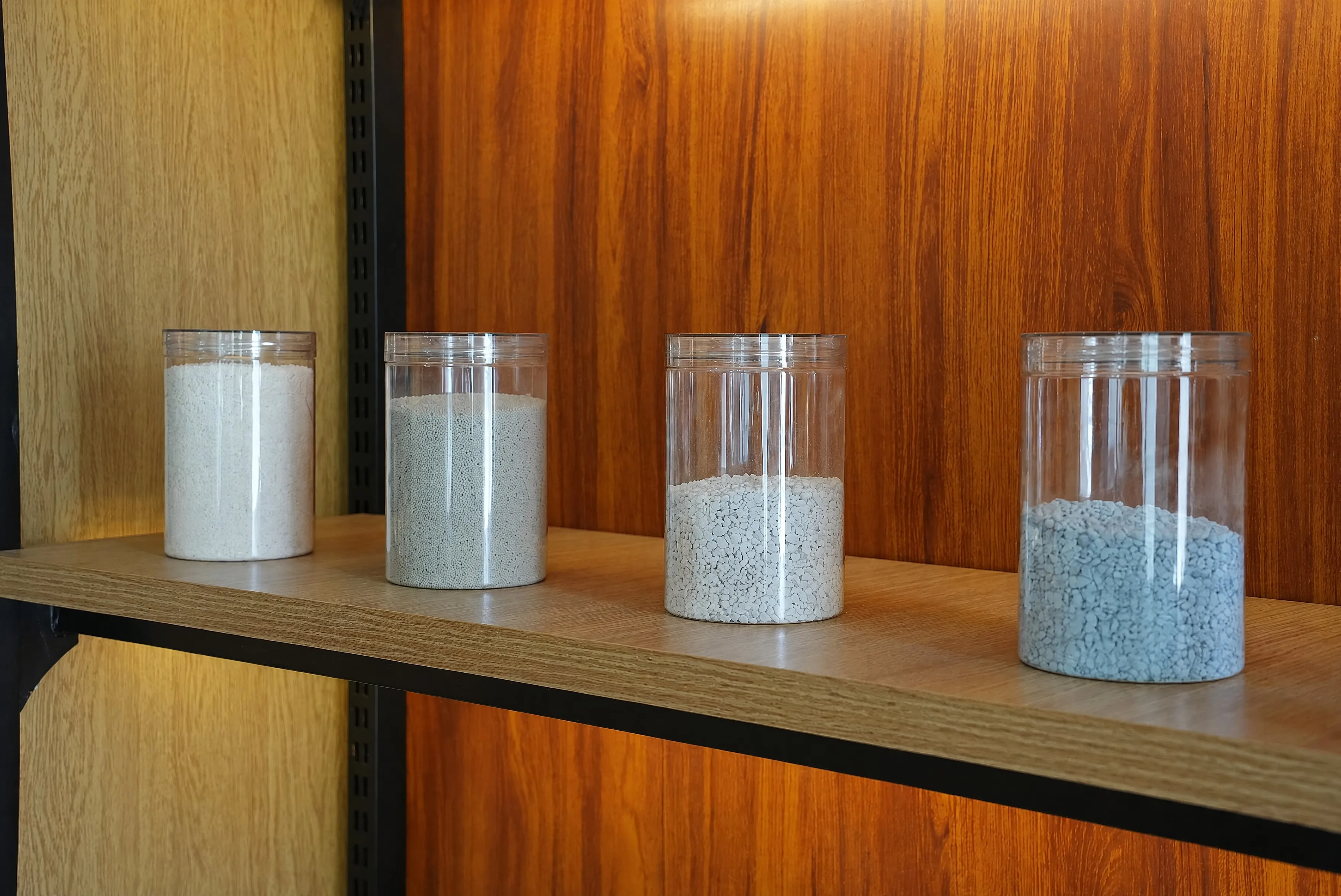
Zeolite granules and plant-based litter base materials in sample jars
Factory view: We manufacture all five base lines in-house and sample additives exactly as shown above during formula development. Our mixed blend page covers the full additive scope — activated carbon granules, zeolite powder, baking soda infusion and nano-silver antibacterial — plus micro-encapsulated fragrance from IFF/Givaudan-approved houses. For plant-based formulas, see the tofu and cassava pages; for mineral, the bentonite page documents clump-strength testing after additive blending. The private label page shows how a formula is locked under NDA once you fix the additive system.

Why “Stronger Fragrance” Does Not Mean “Stronger Odor Control”

This is the single most common misread in the category — and the most exploitable gap in competitor positioning. A strongly scented litter that relies on fragrance alone performs worse on ammonia than an unscented litter with activated carbon, because the first masks while the second removes. Consumers eventually notice: the scent fades, the ammonia does not, and the brand gets blamed for a problem the formula never addressed.

Three practical takeaways for your label:

What to Write Into Your RFQ: The Seven Test Fields

Odor-control claims are only as good as the protocol behind them. Add these seven fields to your RFQ and COA requirements — any factory that hesitates on them is selling marketing, not data:

#FieldWhy It Matters
1Batch numberClaims must map to a specific production batch, not a lab demo
2Sample size and quantitySmall samples overstate results; state the tested quantity
3Temperature and humidityAmmonia release accelerates with heat and moisture — conditions change the number
4Ammonia source and concentrationReal urine vs. synthetic ammonia gives different results; state which
5Test durationA 24-hour result tells you nothing about day seven
6Detection methodWhat instrument/standard measured the reduction (e.g., ammonia sensor, GC, sensory panel)
7Re-test ruleWhat happens if a batch fails — re-run, re-formulate, or reject

For the broader audit — reading a COA, checking what a factory actually measured, and the eight-point factory evaluation framework — read our COA guide and our factory evaluation guide. Both are written from the QC side of the table, because that is the side we sit on.

Side Effects: Dust, Clumping, Packaging, Automatic Litter Boxes

Every additive is a trade-off somewhere else. Buyers who skip this section get surprise return rates:

Frequently Asked Questions

What is the difference between odor elimination, adsorption and masking in cat litter?

Elimination removes odor molecules chemically (e.g. baking soda neutralizing ammonia), adsorption traps them physically in pores or mineral lattices (activated carbon, zeolite), and masking simply overlays a stronger smell (fragrance). Masking changes what you smell, not what is in the air — which is why a strongly scented litter can still leave ammonia behind.

Does baking soda actually neutralize cat urine odor?

Yes, as a chemical mechanism: sodium bicarbonate buffers pH and neutralizes volatile ammonia compounds. It is fast-acting but consumed as it reacts, so it works as a supporting ingredient that needs regular renewal — either by the manufacturer (baked into the formula) or by the owner (sprinkled during scooping). It is not a permanent solution on its own.

How long does activated carbon keep working in cat litter?

Activated carbon adsorbs odor molecules into its pore structure and keeps working until the pores saturate — then it must be replaced with the litter change. Exact duration depends on additive dosage, base material, moisture content, cat count, scooping frequency, temperature, humidity and the test method used. There is no honest one-number answer: demand a batch test from your factory with the method and conditions stated.

Is fragrance-free cat litter better for cats?

Fragrance is a masking agent, not an odor eliminator, and cats have far more sensitive noses than humans. Fragrance-free litter that controls odor by adsorption or neutralization (activated carbon, zeolite, baking soda) is the safer default for sensitive cats and is the fastest-growing positioning in premium markets. Fragrance can still be justified as a retail experience choice — but it should never be the only odor-control mechanism.

Can I combine multiple odor control additives in one formula?

Yes — layered systems are the industry standard: a base material that adsorbs (fiber or mineral), a functional granule for ammonia (activated carbon or zeolite), and optionally a supporting chemical (baking soda) plus fragrance for retail perception. Each layer has a different mechanism and lifespan, so a combined formula lasts longer than any single additive. The blend ratio becomes your proprietary formula under NDA.

Which odor control additives are safe for automatic litter boxes?

Granular additives that keep particle size within the litter spec are safe — activated carbon granules and zeolite granules sized to match the base litter work fine in motorized sifters. Powder additives (pure baking soda dust, loose deodorizer powders) can clog filters and sensors and should be avoided or micro-encapsulated. Always confirm granule size compatibility with the sifting mechanism before finalizing the formula.

How do I verify a factory’s odor control claims?

Ask for the batch COA and the test protocol behind it: batch number, sample size, temperature and humidity, ammonia source and concentration, test duration, detection method, and the re-test rule if the batch fails. A claim without a stated method is a marketing claim. Our COA reading guide explains how to audit what a factory actually measured.

What is the difference between zeolite and activated carbon?

Zeolite (clinoptilolite) removes ammonia by ion exchange — ammonium ions are captured in the mineral lattice — plus physical adsorption in its honeycomb pores. Activated carbon adsorbs a broader range of odor molecules (ammonia, sulfur compounds, organic VOCs) into its pore structure. Both are long-acting relative to fragrance, both saturate and need replacement, and they are commonly combined in premium formulas.

Bottom line: sell the mechanism, not the scent. An odor-control formula is a layered system — adsorption for the long haul, neutralization for speed, antimicrobial for the source, fragrance only for perception. Demand the seven RFQ test fields from any supplier, and treat “7 days” claims as unverified until the batch COA with method arrives. If you want to compare additive systems on your actual base material, message us on WhatsApp — we will send free samples of the additive granules and run the clump-and-dust checks with the test fields above.

Lisa Wei — Export Director at Jinan Silk Pet

About the Author

Lisa Wei — Export Director, Jinan Silk Pet

I have spent over a decade on the manufacturing side of the cat litter industry — sourcing raw materials, running batch COAs, and coordinating shipments to buyers across the Middle East, Latin America, Europe and Asia. This guide is based on how we actually sample and blend additives during formula development. Questions about an odor-control system for your market? Email weihuidan@jinansilkpet.com or WhatsApp +86 135 8907 1779 — free additive samples ship in 5–7 days.

Request a Quote

Get in Touch

Tell us your base material, target market and odor-control priority — we'll send additive samples and a test plan within 24 hours. Prefer chat? WhatsApp us directly →

We respect your privacy. No spam, ever.