What Is Silica Gel Cat Litter?
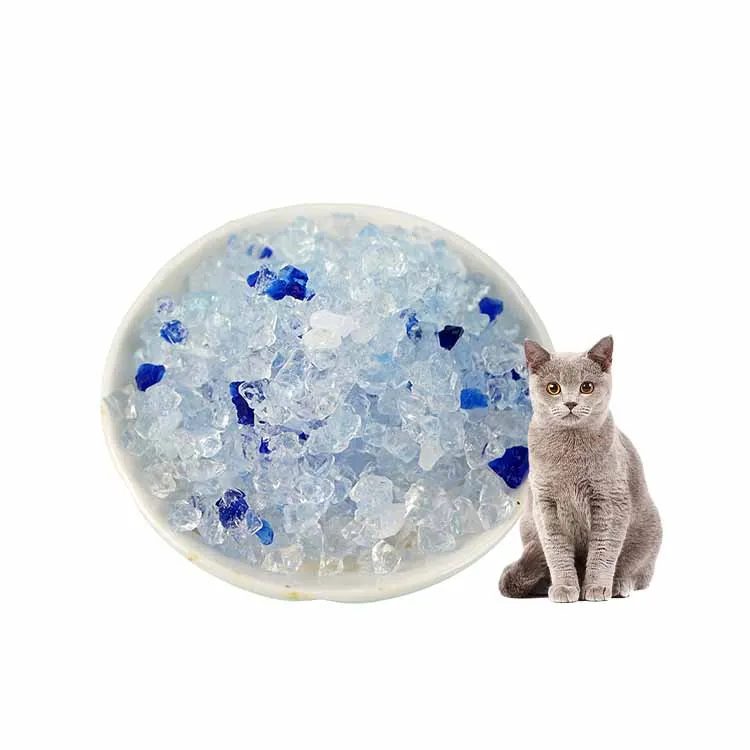
Silica gel crystal cat litter (also written "crystal litter") is made from amorphous silica gel — the same moisture-absorbing material used in food packaging — formed into porous granules of 1–8mm. Instead of clumping when wet, each crystal absorbs urine into its internal pores, where moisture is retained and odor is locked until the crystal is saturated.
Because the crystals do not break down when wet, a silica gel tray is not scooped daily. The owner removes solid waste, stirs occasionally, and replaces the entire tray every 2–4 weeks — roughly two to four times less product per month than clay litter. The color-change indicator crystals (blue shifting toward pink as they saturate) take the guesswork out of "when is it full?"
For retailers, that translates into a completely different SKU economics: a higher unit price per bag, justified by a longer use cycle — and a format with loyal repeat buyers in the markets where it is established.
How Silica Gel Crystal Litter Works
- Absorption, not clumping: urine is drawn into the crystal's internal pore structure and held there — no wet clumps to scoop, no ammonia release while it is trapped.
- Moisture evaporation: the surface dries quickly between visits, keeping the tray surface comfortable for the cat.
- Odor lock: absorbed moisture stays inside the crystal, so odor compounds are locked until the tray is replaced.
- Saturation indicator: color-change beads shift as the tray fills, giving the owner a clear replacement cue at 2–4 weeks.
Why Crystal Litter Wins in North America, Western Europe, Japan & Korea
Silica gel litter is the dominant premium format in markets with high labor cost and dense urban living:
- Usage economics: one 2–4 week cycle vs. roughly one week for the same weight of clay — fewer bags, fewer store trips, less waste.
- Low maintenance: no daily scooping of wet clumps; ideal for multi-cat households, busy professionals, and vacation homes.
- Cleanliness: ultra-low dust (≤0.05%) and lightweight granules — less dust in the air, less tracking on floors.
- Transport efficiency: crystals are lighter than clay per volume, which improves container economics for importers.
B2B Buyer Tip: When comparing crystal litter suppliers, ask for the saturation indicator's color-shift mechanism, the dust test method, and granule size distribution. A "30-day odor" claim without a color-change indicator is just a bag of crystals — the indicator is what makes the product reorderable.
Technical Specifications
| Parameter | Specification |
|---|---|
| Material | Amorphous (non-crystalline) silica gel — food-grade grade |
| Granule Size | 1–8 mm (custom ranges available for OEM) |
| Type | Non-clumping crystal (full-tray replacement format) |
| Saturation Indicator | Color-change beads — blue to pink as moisture saturates |
| Odor Control | 30 days per fill, moisture-trapped odor lock |
| Dust Content | ≤0.05% (vibration sieving test) |
| Durability / Lifetime | 2–4 weeks per bag per cat before full replacement |
| Safety | Non-toxic, dust-minimized; no clay dust or plant allergens |
| Packaging | 2L–20L bags (PP/Kraft), custom print; bulk ton bags |
| MOQ | 38 tonnes (1×40'FCL); mixed-container options available |
Pros & Cons — An Honest Comparison for Importers
Why brands stock crystal litter
- Typically 2–4 week replacement cycle (varies with cat count, humidity and usage; verified per batch) — strong repeat-purchase economics
- Ultra-low dust and lightweight — cleaner, easier for the owner
- Odor control with visual saturation indicator — duration verified per batch with the test method stated
- Premium price tier with loyal buyers in US/CA/W-EU/JP/KR
- Lighter per volume — better container utilization
What to know before you commit
- Non-clumping — solid waste must be scooped; wet urine stays in the tray until full replacement
- Higher price per bag than clay (offset by longer use)
- Not flushable — never flush crystals
- Some cats dislike the crystal texture underfoot — worth a sample test with your target market
Is Crystal Cat Litter Safe? Amorphous vs Crystalline, Explained
Quick answer: crystal cat litter made from amorphous (non-crystalline) silica gel is the same material family used in food packaging; in normal use it does not produce the respirable crystalline silica dust associated with silicosis concerns. The "silica danger" articles you sometimes see refer to industrial crystalline silica dust (mining, cutting, sandblasting) — a different material in a different setting.
What buyers should verify instead: (1) the material statement on the COA — amorphous silica gel, not crystalline; (2) the dust value with a stated sieve/ISO method (ours: ≤0.05%); (3) a heavy-metal test where your market requires it. Common-sense handling — pour gently, avoid inhaling the fine dust, keep the tray in a ventilated area — applies to every litter type, including clay. We do not claim "zero risk" for any material; we provide the documents so you can decide.
Automatic Litter Box Compatibility
Crystal litter works with sifting and rake-style automatic litter boxes designed for non-clumping litter. The granules fall through the sifting mechanism while solid waste is removed, and the full-tray replacement cycle matches the lower-maintenance format. Confirm your target model's recommended litter type before sampling — and tell us the model so we can match granule size.
OEM & Private Label Options
- Granule size: 1–8mm standard; tighter ranges (e.g. 2–4mm) available for specific boxes.
- Scent: unscented, green tea, lavender, activated carbon, and custom fragrances.
- Indicator color: standard blue-to-pink, or custom indicator colors.
- Packaging: 2L–20L bags, PP/Kraft, custom print, multi-language labeling; bulk ton bags.
- Lab support: batch COA with our eight core indicators, third-party SGS reports on request.
Evaluate any supplier with our 8-Point factory verification framework, and use our product comparison page to see how crystal litter fits against the other five lines.
Ingredient & Evidence Disclosure
Every silica gel crystal order ships with the evidence pack an importer needs to verify the product and defend the label:
| Evidence Item | Status |
|---|---|
| Ingredient statement (amorphous silica gel, additives) | Provided with quotation |
| Batch COA with test methods (density, moisture, dust, absorption, heavy metals) | Per batch, with batch number |
| Moisture-content test and drying method | Per batch |
| Moisture-barrier packaging confirmation | Confirmed at RFQ |
| Container loading plan (bulk density, bags per container) | Provided with quotation |
B2B Buyer Notes
Silica gel loads by weight, not volume: 38t per 40HQ is the standard MOQ (color-indicating or non-indicating). Key specs to verify on the COA: absorption rate, dust after sieving, and indicator dye safety. Request the batch COA with methods before confirming.
Third-party reports are provided with the TDS on request. Where a document does not yet exist for a specific claim, we say so rather than promise it.
Payment Terms & Order Process — What Bulk Buyers Should Expect
Before you send an RFQ, know the standard commercial terms so nothing surprises you at contract stage:
- Payment structure: 30% deposit with the order (reserves your production slot), 70% before shipment against the packing list and loading documents. T/T is standard; L/C at sight is available for repeat programs.
- MOQ and mixed loads: 38 tonnes per SKU in a 40HQ, or a mixed 20ft/40ft container combining crystal litter with our other lines (tofu, bentonite, cassava) so you can test the crystal format alongside a volume SKU.
- Sample policy: samples ship in 5–7 days after formula confirmation; sample and courier costs are stated in writing and credited against the first order.
- Lead time: production 10–15 days after deposit, ocean transit 20–45 days depending on destination port.
- Currency protection: quotes reference a fixed exchange-rate band (e.g. 6.76 RMB/USD) with a defined re-quote threshold, so multi-month programs do not land currency risk on one side of the deal.
- Documents with each shipment: commercial invoice, packing list, batch COA with methods, certificate of origin; SGS/CTI pre-shipment inspection on request.
For the full RFQ and verification framework, see our 16-point factory quote checklist and the private label QC checklist.
Frequently Asked Questions About Silica Gel Cat Litter
Is silica gel cat litter flushable?
No — crystals do not dissolve and will block plumbing. Dispose of saturated crystals in household waste.
How long does one bag of silica gel litter last?
Typically 2–4 weeks per cat, versus about one week for the same weight of clay litter. The entire tray is replaced every 2–4 weeks instead of daily scoop-and-refill. Actual duration varies with cat count, humidity and usage — we state the range as batch-verified with the test method on the COA, not as a guarantee.
How does the color-change indicator work?
Indicator crystals shift color as they absorb moisture. When most beads have changed, the tray is saturated and ready for full replacement — a clear visual cue.
Is silica gel litter safe for cats?
Yes — we use amorphous (non-crystalline) silica gel, the food-packaging grade, with dust ≤0.05% (method stated on the COA) and no clay or plant allergens. The silicosis concerns sometimes linked to "silica" come from industrial crystalline silica dust (mining, cutting) — not from amorphous silica gel in cat litter. Normal handling advice applies: pour gently and avoid inhaling the fine dust.
Can silica gel litter be used in automatic litter boxes?
Yes, with sifting or rake-style boxes designed for non-clumping litter. Tell us your model and we will recommend the right granule size.
What is the MOQ?
38 tonnes per SKU (1×40'FCL). Mixed-container options with other product lines are available.
Can I customize granules, scent and packaging?
Yes — granule size, scent, indicator color, packaging from 2L to 20L with custom print, and bulk ton bags.
What is the wholesale price of silica gel cat litter?
Silica gel is a premium format: the price per bag is higher than clay, but the 2–4 week replacement cycle cuts monthly cost per cat. Because density, granule range and indicator type all move the price, we quote per tonne with the density basis and packaging cost itemized — a bare price with no basis is not comparable. Request the itemized quote and current TDS for your market.
What are the payment terms and delivery time for bulk orders?
Standard terms: 30% deposit with order, 70% before shipment against loading documents. T/T for containers, L/C at sight for repeat programs. Production runs 10–15 days after deposit and ocean transit 20–45 days depending on destination. The full schedule is confirmed on the PI before you pay the deposit.
Can I private label silica gel cat litter for my market?
Yes — private label is standard for crystal litter. You provide the brand; we handle granule size, indicator color, scent, bilingual packaging design and batch documentation. Formula exclusivity is fixed under NDA so your SKU is not resold to a competing importer in the same market.