How Does This Tofu Cat Litter Perform?
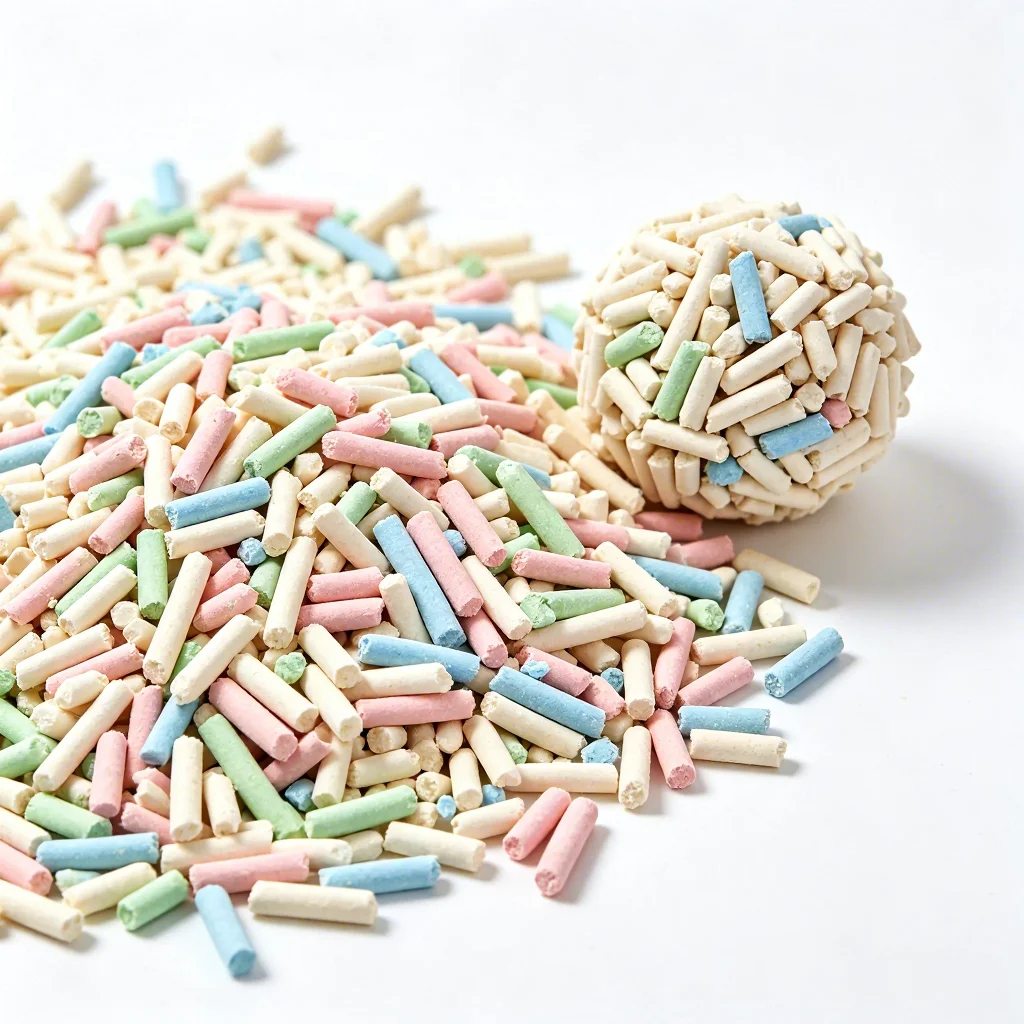
This is 100% plant-based cat litter — made from pea fiber (primary structure), corn starch (natural binder), and guar gum (clumping agent). All three ingredients are certified food-grade. The pellets are formed through a die-cast extrusion process and dried at controlled low temperature (65°C) to preserve structural integrity — no chemical additives, no synthetic fragrances unless you specify them. The result is a litter that clumps firmly, flushes without clogging, and biodegrades in soil within 30 days.
| Parameter | Specification | Test Method |
|---|---|---|
| Base Material | Pea Fiber + Corn Starch + Guar Gum | Ingredient Declaration |
| Pellet Shape | Cylindrical (extruded) | Visual Inspection |
| Pellet Diameter | 1.5–2.5 mm (customizable) | Digital Caliper |
| Clumping Speed | ≤5 seconds | 50ml Water @ 25°C |
| Clump Hardness | ≥30N (compression test) | Texture Analyzer |
| Dust Content | ≤0.05% | 5-Stage Air-Jet Filtration |
| Odor Control Duration | 7–10 days (single cat) | Ammonia Headspace GC |
| Water Absorption Rate | 400%–500% | Gravimetric Absorption |
| Flushability | Dissolves within minutes | Agitation Dissolution Test |
| Biodegradation | ≤30 days in soil | ASTM D6400 Compost Test |
| Moisture Content | ≤8% (anti-mold standard) | Oven Dry @ 105°C |
| Bulk Density | 0.55–0.70 g/cm³ | Tapped Density Method |
| Pellet Hardness | ≥55N | Crush Resistance Test |
| Color | Natural Cream / Custom (Green Tea, Coffee, Sakura Pink) | Visual / Lab |
| Fragrance | Unscented / Green Tea / Lavender / Peach / Coffee / Activated Carbon / Custom (client-specified) | — |
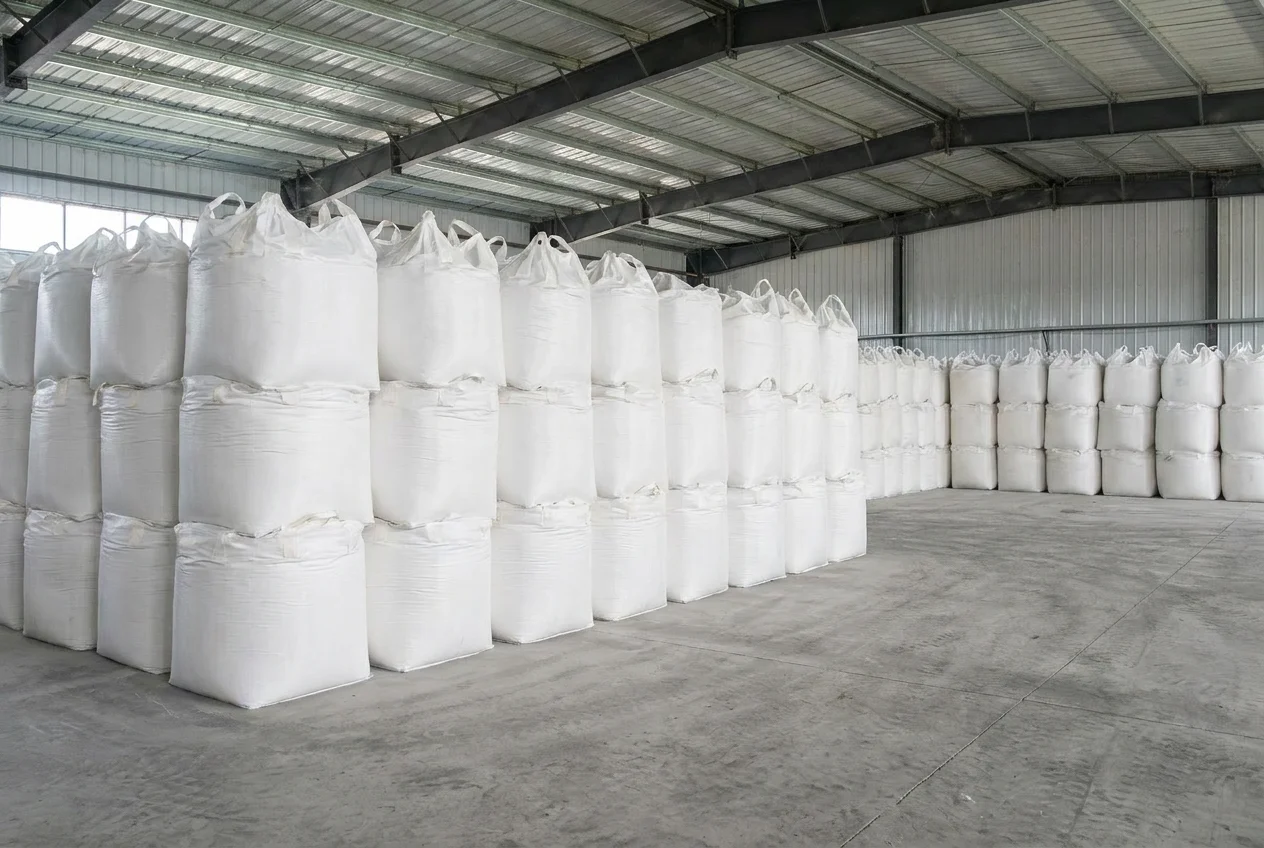
| Packaging | 1.25–20 kg bags, Kraft / PE / Vacuum Brick, custom print; ton bag (bulk) available | — |
| MOQ | 18 tonnes (1×20'FCL) | — |
Tofu Density (g/L) & Container Math
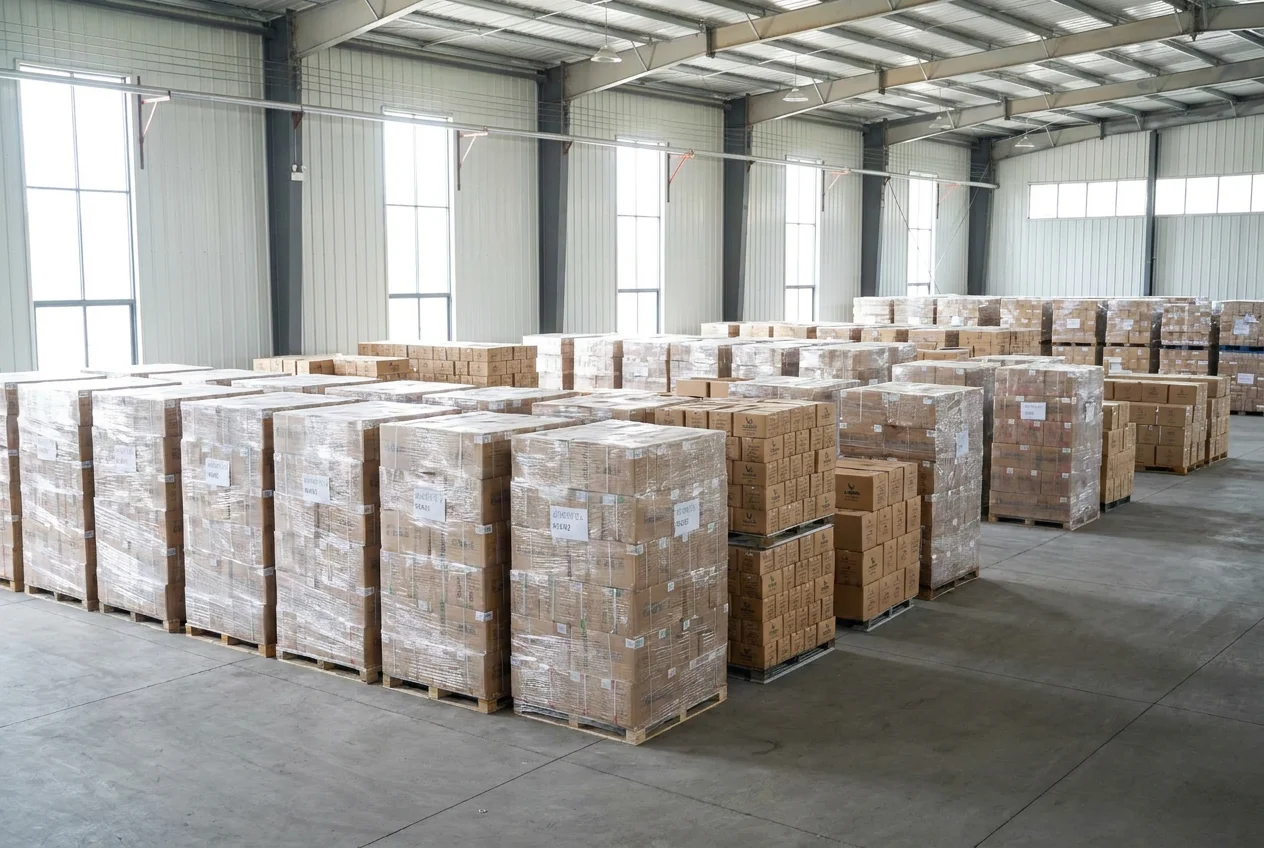
Our tofu litter measures 597 g/L in the CTI third-party batch report (tapped density method) — equivalent to 0.597 g/cm³. Because plant-based litter is lighter than bentonite (0.95 kg/L), a 20-foot container fills by volume before weight: expect roughly 17 tonnes of tofu per 20GP versus ~20–26 tonnes of bentonite, so freight per bag, not per tonne, is the honest comparison. The full calculation is in our bulk density guide; the L-vs-kg trap is covered in liters vs kilograms explained.
Note: density varies by batch — our spec range is 0.55–0.70 g/cm³; the 597 g/L figure is the CTI-measured point value with the method stated on the report.
Which Granule and Format for Your Market?
| Granule / Format | Best For | Packaging | MOQ | Target Markets |
|---|---|---|---|---|
| 1.5 mm fine | Automatic boxes (Litter-Robot, PETKIT), dust-sensitive households | 2.5 / 6 kg | 18 T | US premium e-commerce, Japan, Korea |
| 2.0 mm standard (recommended) | Default — all major auto boxes + manual scooping | 2.5 / 6 / 10 kg | 18 T | Global mainstream retail |
| 2.5 mm coarse | Economy formats, multi-cat households | 6 / 10 kg | 18 T | Latin America, Gulf value retail |
| 1 kg carton (1×12) | Premium / pharmacy channels | 1 kg box | 18 T | Japan, Korea, premium EU |
Every format ships with the batch COA and container plan. For bulk supply, see our wholesale tofu cat litter supplier page; for branded lines, the private label page. Granule-to-market fit is our engineering judgment from export programs, not a standardized rating.
B2B Buyer Tip: Not all "tofu" litter is created equal. The binder formula is the difference between a product that flushes cleanly and one that forms a paste in pipes. Ask your supplier: (1) What is the pea fiber percentage? (2) What binder is used — corn starch only, or corn starch + guar gum? (3) What is the moisture content? Below 8% prevents mold during sea freight; above 10% is a red flag. If a supplier can't answer these three questions, walk away.
Watch Tofu Litter in Action
Two tests every importer should see before placing an order: clumping performance and water solubility.
Clumping Test
50ml water poured onto tofu pellets. Watch the absorption and clump formation.
Water Solubility Test
Tofu litter pellets submerged in water. Dissolves completely — safe for sewage systems.
Why Tofu Cat Litter Is the World's Fastest-Growing Category
In 2020, tofu cat litter was a niche product in Japan and South Korea. Today it accounts for over 40% of premium cat litter sales across Europe and North America — and the growth is accelerating. Three forces are driving this shift:
- Flushability demand: In Germany, Japan, and the UK, "flushable cat litter" is the #1 search modifier — urban consumers in apartments without outdoor waste disposal want a litter they can flush. Tofu litter is the only mainstream option that meets this need without plumbing risk.
- Eco-regulation tailwinds: The EU's Single-Use Plastics Directive and similar regulations in Japan and Australia are pushing retailers toward biodegradable alternatives. Tofu litter, made from agricultural byproducts, qualifies as a sustainable consumer good under most green-label frameworks.
- Health consciousness: Post-pandemic consumers are scrutinizing what goes into their homes. Food-grade, non-toxic, zero-formaldehyde litter appeals directly to this mindset — especially for households with children, kittens, or respiratory-sensitive cats.
For B2B importers, this means: tofu cat litter is not a trend. It is a structural category shift. The importers who secure reliable factory partnerships now will own the shelf space when the category matures.
Honest Product Assessment: Tofu vs. Other Cat Litters
We believe transparent information builds better business relationships. Here's what tofu litter does best — and where bentonite still wins. Use this to position your product mix correctly.
✅ Why Buyers Choose Tofu
- Flushable & biodegradable — the #1 consumer demand in urban markets; dissolves in water within minutes, composts in 30 days.
- 99.9% dust-free (≤0.05%) — 5-stage air-jet filtration; no respiratory irritation for cats or owners.
- Food-grade safe — pea fiber, corn starch, guar gum; zero formaldehyde, zero heavy metals (SGS verified).
- Lightweight — 0.55 kg/L — reduces shipping cost per bag and improves retail shelf efficiency. A 10kg bag is 40% larger than the equivalent bentonite weight.
- 7–10 day odor control — natural NH₃ adsorption through porous fiber matrix, not chemical masking.
- Multiple colors + scents — Green Tea, Lavender, Peach, Coffee, Activated Carbon, and many more — plus custom client-specified fragrances. Exclusive OEM formulas under NDA.
- Best retail positioning: Eco-premium tier. Proven bestseller in Japan, Korea, Germany, UK — with 40–60% retail margin potential.
⚠️ Where Bentonite Still Wins
- Higher per-tonne cost: Plant-based production costs more than mineral processing. Tofu retails at a premium tier; not suited for pure price-competition markets.
- Lower container density: 18T per 20'FCL vs 26T for bentonite. Higher freight cost per kg delivered.
- Softer clump: ≥30N vs ≥4kg for bentonite. Adequate for standard use, but heavy multi-cat homes may prefer bentonite's rock-hard clump.
- Humidity sensitivity: Pea fiber absorbs ambient moisture. Markets with >75% RH require moisture-barrier packaging (we provide this).
- Contains soy: Unsuitable for cats with confirmed soy allergy. Offer cassava (soy-free) for this segment.
- Regional flushing regulations: The litter itself is flushable, but some municipalities advise against flushing cat waste due to Toxoplasma gondii. Check local labeling requirements.
- Not the anchor SKU: Bentonite leads on volume; tofu leads on margin. Smart importers stock both.
Five Engineered Advantages That Sell Themselves
Every advantage below is measurable and demonstrable — backed by in-house lab data and third-party SGS verification. These are the selling points your retail customers will use.
1. Truly Flushable — Dissolves Within Minutes
Our pea fiber + corn starch + guar gum matrix breaks down rapidly in water. Pellets disintegrate in a matter of minutes — far faster than industry-standard tofu litters. No clogging, no residue. The key is the pea fiber content: too low (<40%) and the pellet stays intact; too high (>70%) and clumping weakens. Our formulation hits the 55–65% sweet spot verified across 200+ production batches.
2. 99.9% Dust-Free — 5-Stage Filtration (≤0.05%)
Respiratory health is the #1 concern for cat owners. Our exclusive 5-stage dry filtration process removes virtually all fine particles: (1) Raw fiber screening at 0.5mm mesh, (2) Precision die-cast extrusion for uniform diameter ±0.2mm, (3) Low-temperature 65°C belt drying to prevent surface cracking, (4) Dual-deck vibration sieving for broken fragment removal, (5) Compressed air-jet dedusting before bagging. The result: ≤0.05% dust — the lowest in the plant-based litter category.
3. NH₃ Adsorption — Science, Not Masking
Conventional litters mask odors with heavy fragrances. Our tofu litter's porous pea fiber matrix physically adsorbs ammonia (NH₃) — the primary odor molecule in cat urine — at 28.6mg/g capacity, approximately 3× higher than standard bentonite. The mechanism is physical adsorption into the fiber pore structure, not chemical neutralization, so the effect persists for 7–10 days without fragrance degradation. Fragrance is optional — the base formula works unscented.
4. Food-Grade Safety — Zero Toxicity
Every raw ingredient — pea fiber, corn starch, guar gum — is certified food-grade. No formaldehyde, no synthetic binders, no heavy metals. Verified by independent SGS testing covering 48 harmful substances. Even if a kitten ingests a pellet, there is zero toxicity risk. This is a genuine point of difference at retail: "Food-Grade Safe" on your packaging, supported by downloadable SGS certificates.
5. Fast Clumping + Non-Stick Bottom
The corn starch + guar gum dual-binder system initiates clumping the moment moisture contacts the pellet. The clump forms a tight ball with ≥30N hardness — strong enough to scoop cleanly, yet the corn starch creates a dry base layer that prevents bonding to the tray. Clump integrity survives the scoop-to-bag journey without crumbling. Customers never scrape a stuck-on mess from the litter box again.
Tofu vs. Other Cat Litter Types — Quick Comparison for Importers
| Tofu | Bentonite | Cassava | Silica Gel | |
|---|---|---|---|---|
| Clumping Speed | ≤5s | ≤3s (Fastest) | ≤4s | Non-Clumping |
| Flushable | ✅ Yes — dissolves within minutes | ❌ No | ⚠ Not recommended | ❌ No |
| Biodegradable | ✅ ≤30 days in soil | ❌ Mineral | ✅ ≤60 days | ❌ Synthetic |
| Dust Level | ≤0.05% | ≤0.1% | ≤0.05% | ≤0.1% |
| Bulk Density | 0.55 kg/L (Light) | 0.95 kg/L (Heavy) | 0.60 kg/L | 0.75 kg/L |
| Container Load (20'FCL) | 18T | 26T (Best value) | 18T | 20T |
| Per-Tonne Price | $350–$550 | $150–$250 | $380–$500 | $400–$600 |
| Food-Grade Safe | ✅ SGS Verified | ⚠ Mineral | ✅ | ⚠ Synthetic |
| Odor Control | 7–10 days | 5–7 days | 7–10 days | 20–30 days |
| OEM Color Options | 4+ Custom | 2 options | 2–3 options | Limited |
| Best Markets | Japan, Korea, Germany, UK, North America | Middle East, Africa, Latin America | Premium EU, North America | Premium, Long-Lasting |
| Retail Position | ⭐⭐⭐⭐⭐ Eco-Premium | ⭐⭐⭐ Standard | ⭐⭐⭐⭐⭐ Super-Premium | ⭐⭐⭐⭐ Luxury |
Tofu cat litter is the margin-play SKU in a distributor's product mix — higher per-bag retail price, strong eco-branding appeal, and the flushable convenience that commands consumer loyalty. Pair it with bentonite as your volume anchor and you cover both ends of the market from one supplier.
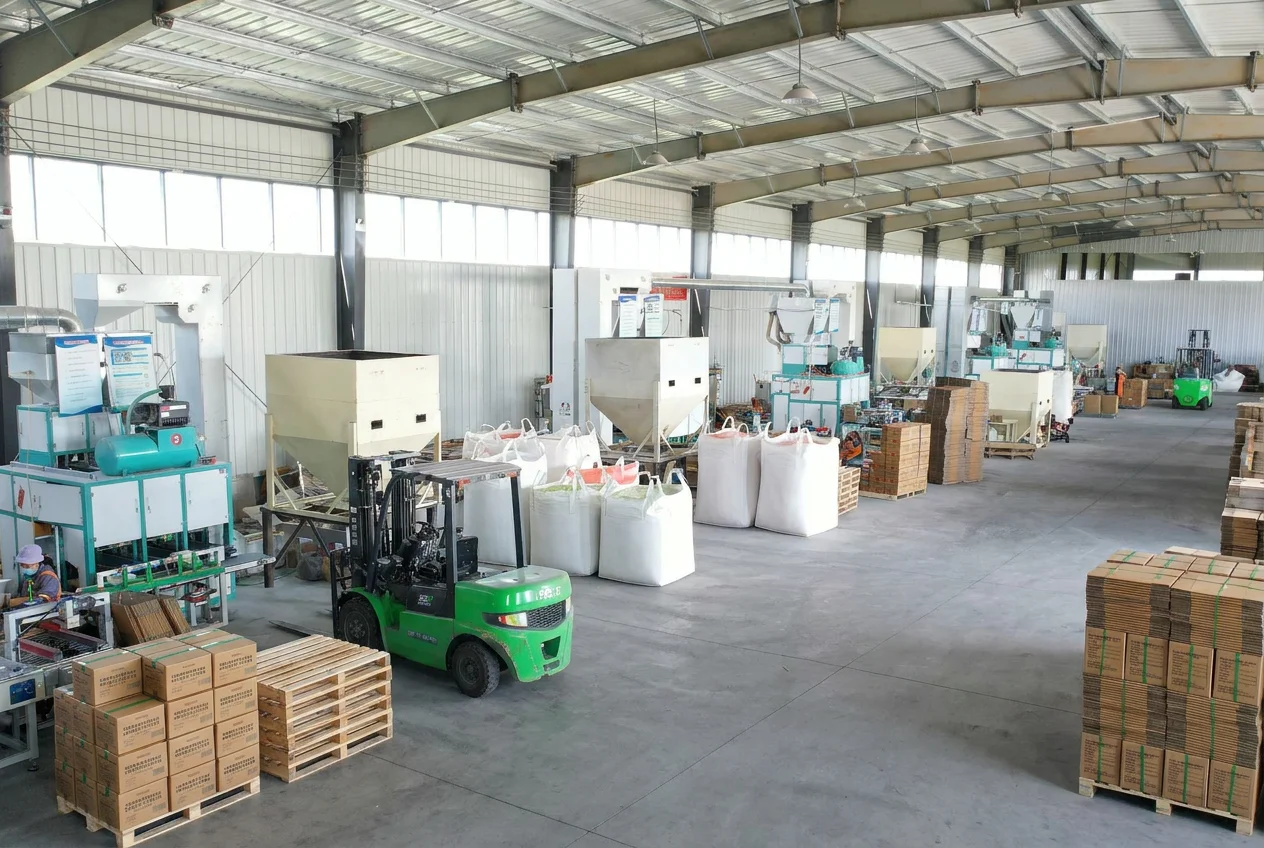
Inside the Tofu Cat Litter Production Line
From raw pea fiber intake to sealed retail bag — every step under ISO 9001 quality management.
Manufacturing Under ISO 9001 Quality Management
Our factory operates dedicated tofu cat litter production lines with four-stage quality control:
- Raw material incoming inspection: Pea fiber, corn starch, and guar gum tested for moisture content, purity, particle size, and microbiological safety before entering production. Certificates of Analysis from raw material suppliers are cross-checked against in-house lab results.
- In-process sampling every 2 hours: QC technicians pull samples from the production line to test diameter consistency (±0.2mm tolerance), moisture content, and pellet hardness. Any deviation triggers immediate adjustment — not discovered days later in a warehouse.
- Pre-packaging performance test: Every batch undergoes a 30-minute water absorption and clumping performance test before being cleared for packaging. Clump hardness, dust level, and dissolution time are recorded and attached to the batch's Certificate of Analysis.
- Pre-shipment microbiological test: Final product tested for total plate count, mold, yeast, and coliform bacteria. COA issued per batch with production date, expiry date, and full parameter results. Third-party SGS inspection available on request.
OEM / Private Label Tofu Cat Litter — How It Works
You focus on building your eco-pet brand. We handle the product, formulation, packaging design, certifications, and logistics. Every OEM order follows this process:
- Formula confirmation: Choose base formula (standard pea fiber blend), specify pellet diameter (1.5mm, 2.0mm, or 2.5mm), fragrance (unscented, green tea, lavender, peach, or activated carbon), and color (natural cream, green tea, coffee brown, or sakura pink). Custom exclusive formulas under NDA available for orders of 5T+ per SKU. Samples ship within 5–7 days.
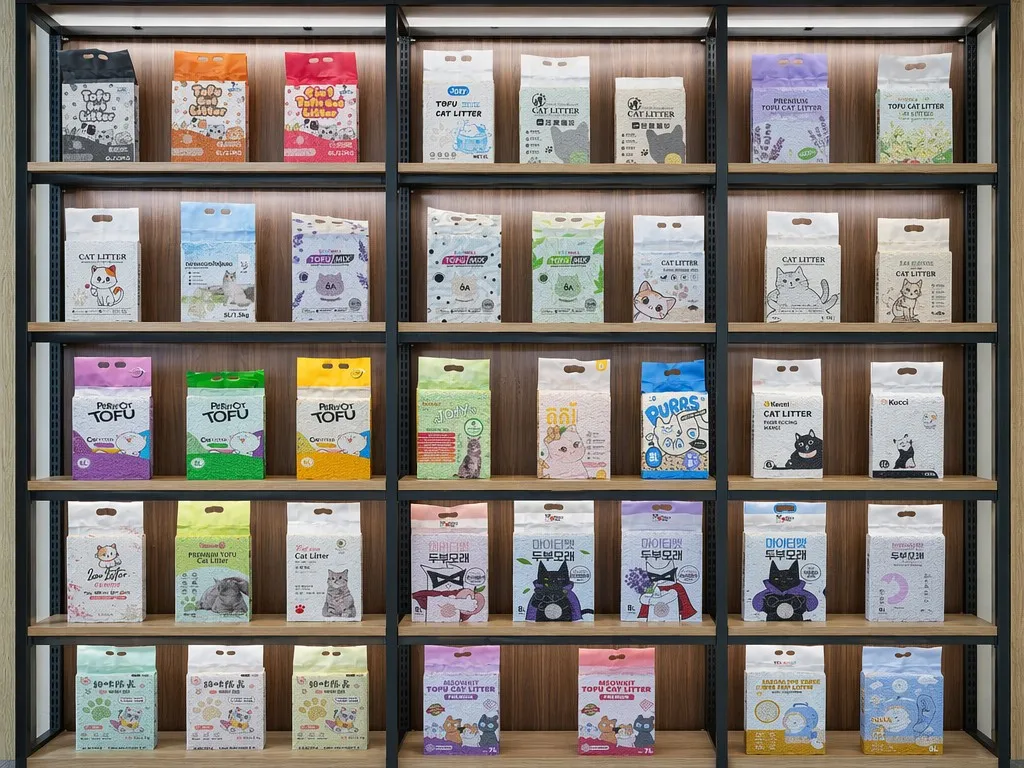
- Packaging design: Bag size options from 1.25kg, 2.5kg, 5kg, 6L, 7L, 10L, up to 20kg large bags. Also available: ton bags (jumbo bags) for bulk industrial shipments. Materials include Kraft paper, PE laminate, or vacuum-sealed brick pack. Custom logo and full-color label artwork. Our in-house design team supports multi-language labeling (EN, ES, FR, DE, JP, KR, AR) and regulatory compliance text for EU, GCC, North American, and Latin American markets.
- Trial order: 18 tonnes (1×20-foot container). Test the market before committing to monthly volumes. Mixed-container loading available — combine tofu with cassava in one shipment to test multiple eco-SKUs with minimal freight cost per SKU. (Note: tofu and bentonite are produced in separate dedicated factories, so tofu+bentonite mixed containers are not supported. For bentonite mixes, please inquire separately.)
- Production and COA: Every production run issues a Certificate of Analysis with clumping speed, dust level, moisture content, pellet hardness, and microbiological test results. Third-party SGS inspection available on request. Shipping from Tianjin or Qingdao port — both are major international container ports with frequent sailings to Europe, North America, Latin America, and Asia-Pacific.
Container Loading & Logistics — Transparent Numbers
| Container Type | Tofu Cat Litter Capacity | Notes |
|---|---|---|
| 20' GP Container | ~18 Tonnes (10kg bags) | Standard trial order size |
| 40' HQ Container | ~25 Tonnes (10kg bags) | Best per-kg freight rate |
| LCL (Less than Container) | From 1 Tonne | Trial/sample orders at adjusted pricing |
| Payment Terms | 30% T/T deposit + 70% before shipment | — |
| Payment Currencies | USD · EUR · CNY | — |
| Export Port | Tianjin · Qingdao | Major international container ports |
| Lead Time (Standard) | 10–15 days | After deposit confirmation |
| Lead Time (OEM) | 20–25 days | Custom packaging + formulation |
| Transit to Europe | ~28–35 days | Sea freight |
| Transit to West Coast USA | ~18–22 days | Sea freight |
| Transit to Latin America | ~25–40 days | Sea freight (varies by destination port) |
Pro Tip for Distributors: The most profitable tofu litter importers stock a 2-SKU strategy: (1) Unscented Natural as the everyday anchor — broadest consumer appeal, and (2) Activated Carbon as the premium tier — it sells 27% better in premium channels because consumers associate "activated carbon" with medical-grade filtration. Both SKUs from one factory, one container, one COA package.
Looking for a cassava–tofu formula? We supply cassava–tofu blends as a custom formula — see our cassava–tofu custom formula page to define the ratio, granule, fragrance and packaging, or request a formula file with your specification and we will confirm feasibility before any commitment.
Ingredient & Evidence Disclosure
Every tofu order ships with the evidence pack an importer needs to verify the product and defend the label:
| Evidence Item | Status |
|---|---|
| Ingredient statement (soybean fiber/starch, binder, additives) | Provided with quotation |
| Batch COA with test methods (density, moisture, dust, clumping, heavy metals) | Per batch, with batch number |
| Moisture-content test and drying method | Per batch |
| Moisture-barrier packaging confirmation | Confirmed at RFQ |
| Container loading plan (bulk density, bags per container) | Provided with quotation |
B2B Buyer Notes
The numbers importers verify first: bulk density 597 g/L (our CTI third-party batch report), moisture <8% at packing, clumping ≤5s, dust ≤0.05%. A 20GP loads ~18t of tofu litter. Flushable claims need a dispersion test tied to your target market's plumbing standards - ask for the test report, not the label copy.
Third-party reports: the CTI batch report behind the 597 g/L density and 96.1% clump-rate figures is provided with the TDS on request. Where a document does not yet exist for a specific claim, we say so rather than promise it.
Frequently Asked Questions About Tofu Cat Litter
Is tofu cat litter really flushable? Won't it clog pipes?
Yes — when formulated correctly. The key is the binder ratio. Our formulation uses pea fiber (55–65%) for structure, corn starch for primary binding, and guar gum as a secondary clumping enhancer. This triple-component matrix disintegrates in water within minutes — far faster than standard tofu litters that rely solely on corn starch. Single-formula corn-starch-only binders can form a paste that clogs pipes — that's the formulation problem, not a tofu litter problem. Always request a water solubility test video from your supplier before ordering.
What is the difference between tofu and cassava cat litter?
Both are plant-based and biodegradable, but they serve different market needs. Tofu litter is made from pea/soy fiber — it's the established eco-premium category leader with proven consumer recognition in Japan, Korea, and Europe. Cassava litter is made from cassava (yuca) root starch — it absorbs 300% of its weight (vs 400–500% for tofu) and is soy-free, making it the choice for the allergy-aware segment. Important: cassava litter is not recommended for flushing — it does not dissolve as readily as tofu and may cause plumbing issues. Tofu is the flushable eco-SKU; cassava is the soy-free premium. Many distributors stock both for different consumer segments.
Can you customize the color, scent, and pellet size?
Yes. Pellet diameter options: 1.5mm, 2.0mm, 2.5mm. 2.0mm is recommended as the default — compatible with all major automatic litter boxes (Litter-Robot, PETKIT, Catlink). Color options: Natural Cream, Green Tea (natural chlorophyll), Coffee Brown (activated carbon), Sakura Pink (beetroot extract). Fragrance options: Unscented, Green Tea, Lavender, Peach, Coffee, Activated Carbon, and many more — or we can develop a custom fragrance to your specification. Exclusive custom colors and fragrances developed under NDA for qualified OEM clients (MOQ 5T per SKU).
How do I verify tofu cat litter quality before placing an order?
Request a physical sample kit (~2kg) and test these five parameters: (1) Clumping speed — pour 50ml water, clump should form within 5 seconds. (2) Flushability — place a clump in a bowl of water; it should disintegrate within minutes with gentle agitation. (3) Dust — pour litter from 30cm height onto a dark surface; visible airborne dust indicates poor screening. (4) Clump integrity — after 10 minutes, the clump should survive scooping without breaking. (5) Moisture — use a moisture meter or lab test; ≤8% is the anti-mold standard. Also request the supplier's batch COA and raw material certificates.
Which countries import the most tofu cat litter from China?
Top importing markets: Japan and South Korea (mature markets, highest per-capita consumption), Germany and the UK (fastest-growing EU markets driven by flushability demand), USA and Canada (rising eco-pet segment), and Australia (strong green-consumer regulatory environment). Tofu litter commands the highest retail price premium in Japan and Germany — markets where consumers willingly pay 40–60% more for flushable, biodegradable pet products.
What certifications does your tofu cat litter have?
ISO 9001 (Quality Management System), HALAL, HACCP, and SMDS certified. Every production batch issues a Certificate of Analysis covering moisture content, pellet hardness, clumping performance, dust rate, flushability time, and microbiological counts. Third-party SGS testing available — covering zero formaldehyde, zero heavy metals, and 48 harmful substance categories. All documentation provided in digital format for your import clearance and retail listing requirements.
Can I mix tofu with other litter types in one container?
Yes — mixed-container loading is one of our most popular services for first-time importers. Tofu and cassava are produced in the same facility, so they can be combined in one container (e.g., 9T tofu + 9T cassava in a 20' FCL). This lets you test both eco-SKUs in your market without committing to two full containers. Note: tofu and bentonite are produced in separate dedicated factories and cannot be mixed in one container. For bentonite mixed loads, please inquire separately.
How does your tofu litter perform in humid climates?
Pea fiber naturally absorbs ambient moisture, which can cause pellet softening in climates with >75% relative humidity. For these markets (Southeast Asia, coastal tropical regions), we offer two solutions: (1) Moisture-barrier packaging — aluminum-foil-lined bags that block ambient humidity during storage and transit, and (2) A modified low-moisture formula (≤6% target instead of ≤8%) with enhanced pellet hardness. Specify your target market's climate zone when requesting samples and we'll provide the appropriate formulation.