weihuidan@jinansilkpet.com WhatsApp +86 135 8907 1779
Health monitoring cat litter — white tofu base with color-changing pH detection granules

Health Monitoring Cat Litter (pH + Occult Blood) — Early Detection, Every Scoop

A white plant-based litter with color-changing indicator granules that react to urine pH and occult blood. The reaction triggers in 1 second and locks the color for 24 hours (48 hours for additive granules), with a healthy range of pH 6.0–7.0. Choose a tofu or cassava base and two granule options — fine granules for a premium line, tofu-style granules for a value line. Food-grade reagents, validated with standard pH buffer solutions, and fully OEM/private label ready.

pH + Blood
Dual Detection
1s
Reaction
24h
Color Lock
Tofu + Cassava
Bases
18T
MOQ

What Is Health Monitoring Cat Litter?

Health monitoring cat litter (also called color changing cat litter, color-changing litter, pH indicator cat litter, or pH detecting cat litter) is a plant-based litter with small color-changing granules mixed into the base. When urine contacts an indicator granule, the granule shifts color according to the urine's pH or the presence of occult blood. You compare the color against the included chart and spot early signs of urinary health issues — before symptoms appear.

It works because the most common feline urinary problems change the chemistry of urine first. Struvite crystals form in alkaline urine, calcium oxalate stones form in acidic urine, and inflammation or stones often leave microscopic blood behind. A daily visual check of the litter box turns routine scooping into a health screening habit — without handling urine or visiting a vet for every check.

For distributors and private label brands, health monitoring litter is the fastest-growing premium SKU in plant-based cat litter. It sits at the intersection of two strong retail trends: the shift to eco-friendly plant-based litter and the rise of proactive pet care, where owners monitor cat health at home before problems become emergencies.

Why a White Plant-Based Base Makes Detection Work

The detection concept is only as good as the canvas. Dark mineral litters hide color changes — a grey or brown base swallows the signal, which is why "smart" bentonite litter barely exists. Our indicator granules need a light, high-contrast surface, and plant-based litter is naturally white or off-white.

We offer two white bases, so you can match the material to your market positioning:

Two Indicator Granule Options — Match the Granule to Your Market

We supply two types of color-changing detection granules. This is not a one-size-fits-all product: you choose the granule that matches your base material and your price positioning.

Premium Route

Fine Indicator Granules → Cassava Base

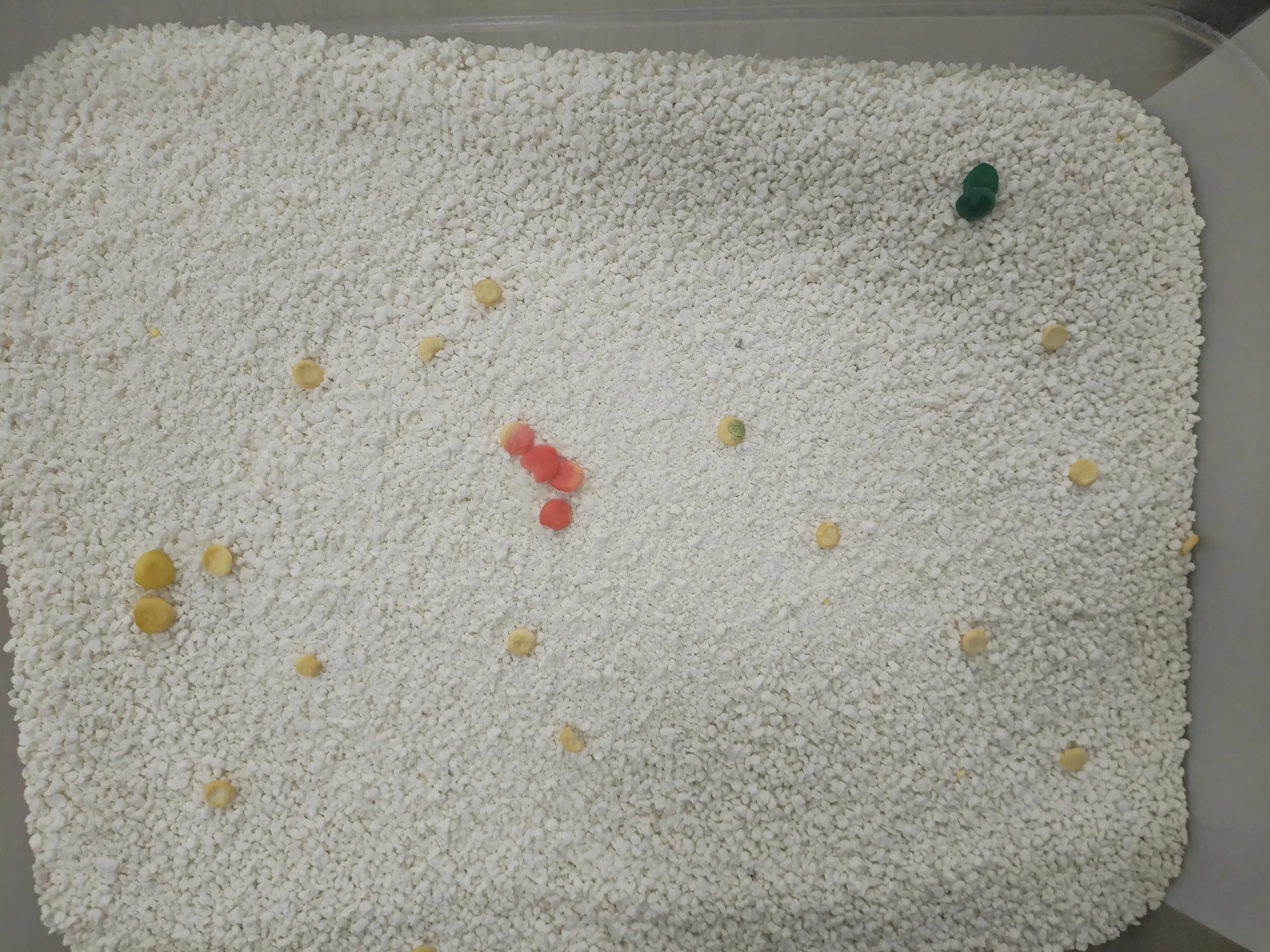
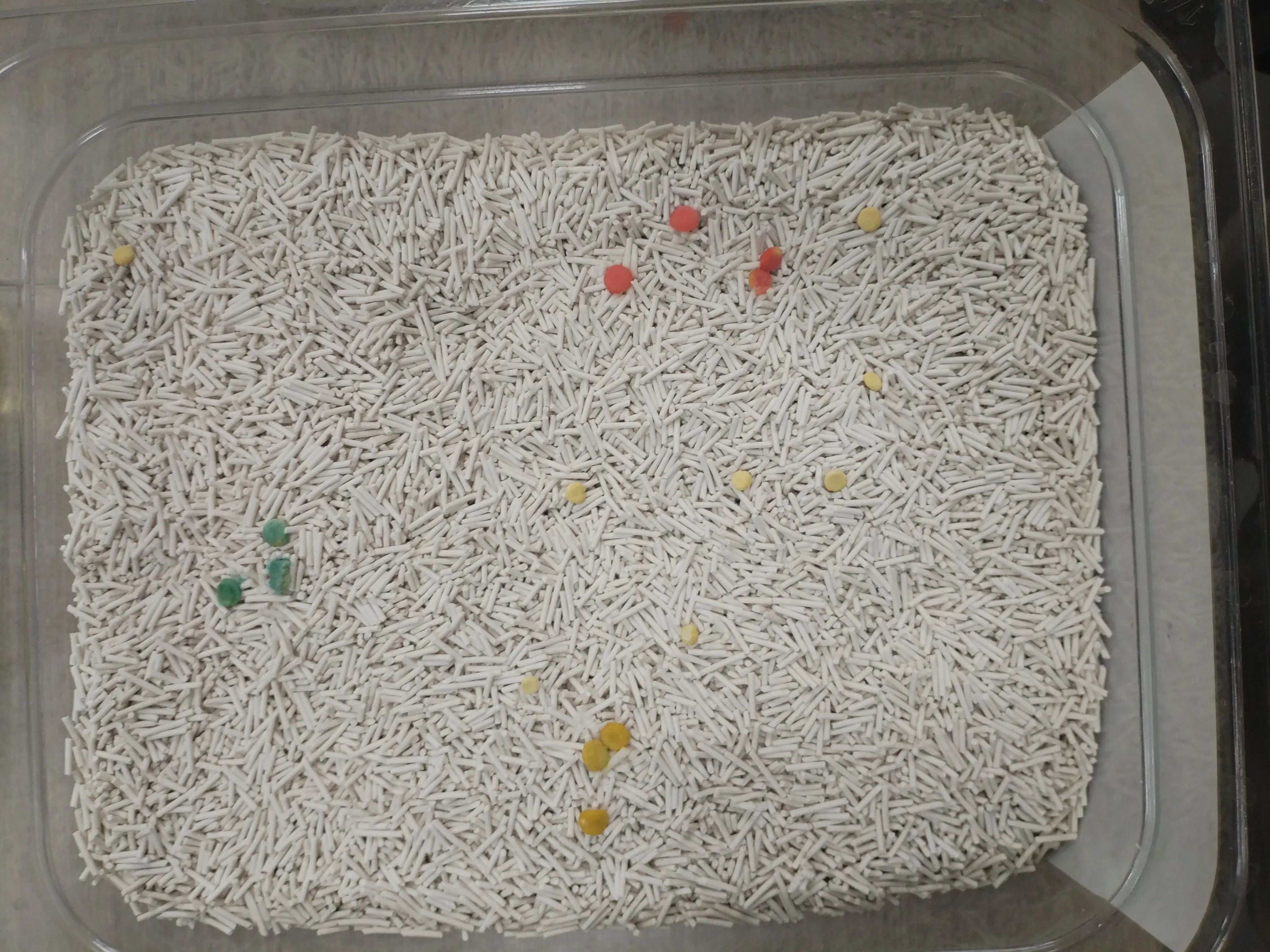
Fine pH detection granules blended into white cassava litter

Small, fine granules blend cleanly into cassava litter's uniform texture, keeping the premium look intact. The high white contrast of cassava makes every color change easy to read. Ideal for veterinary channels, premium pet specialty stores, and brands building a health-positioned flagship SKU.

Value Route

Tofu-Style Granules → Tofu Base

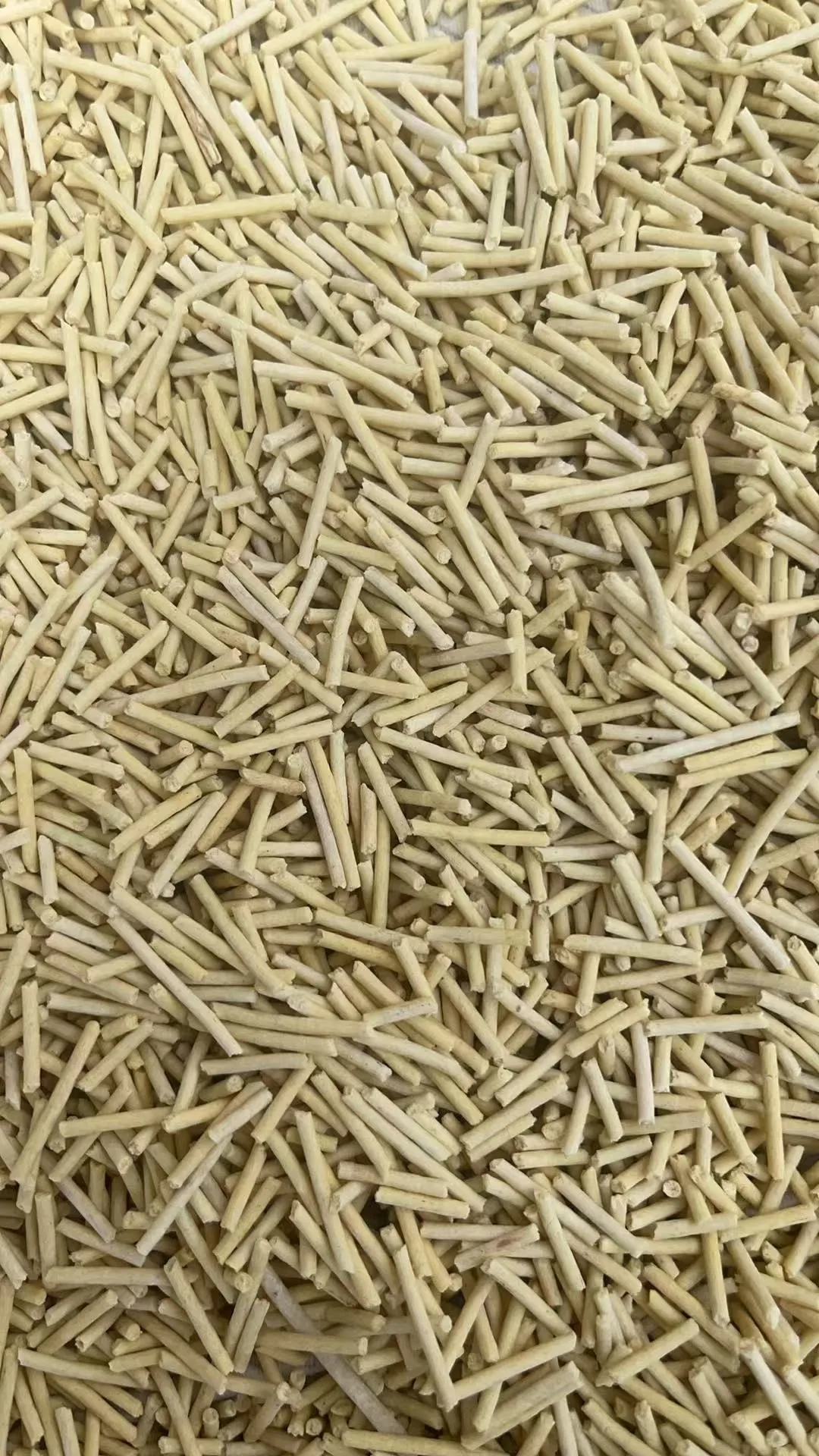
Tofu-style pH detection granules blended into white tofu cat litter

Tofu-style granules match the pellet size and shape of tofu litter, so the mix looks homogeneous and clumps stay consistent. This keeps production efficient and the retail price accessible — the right entry point for e-commerce brands and mass retail testing the category.

OptionGranule TypeRecommended BaseMarket PositioningBest For
PremiumFine granulesCassavaHigh-end health lineVet channels, pet specialty, flagship SKU
ValueTofu-style granulesTofuAccessible price pointE-commerce, mass retail, category entry

Why Most Color-Changing Litters Fail (And How We Fix It)

The concept is simple, but execution separates a reliable product from a gimmick. These are the four most common complaints about color-changing litter — and how our solution answers each one:

1. Slow or weak color response

Cheap indicator formulas take 5–8 seconds or longer to react, and the color is often too weak to read. Buyers can't tell "normal" from "slightly off".

2. Color fades within a few hours

Most owners check the box once or twice a day. If the signal fades after 2 hours, the warning is gone before it is seen.

3. Single-parameter detection

Many products only test pH. Urinary problems that present with blood — stones, cystitis, infection — are completely missed.

4. Dark base hides the signal

Color-changing granules mixed into dark clay litter are nearly invisible, making the product a marketing claim rather than a working tool.

Our answer: a dual-parameter formula (pH + occult blood via the TMB method) that reacts in 1 second and locks the color for 24 hours — on a white cassava or tofu base where the signal is always readable. The reaction is validated in-house against standard pH buffer solutions (pH 4.0 / 6.86 / 9.18) — watch the actual reaction in the videos below instead of taking our word for it.

Watch the pH Reaction Test

Both videos below were recorded in our laboratory. Standard pH buffer solutions are dropped onto the indicator granules to demonstrate the color response on each base material. This is how we calibrate every production batch — and how you can verify the product before you order.
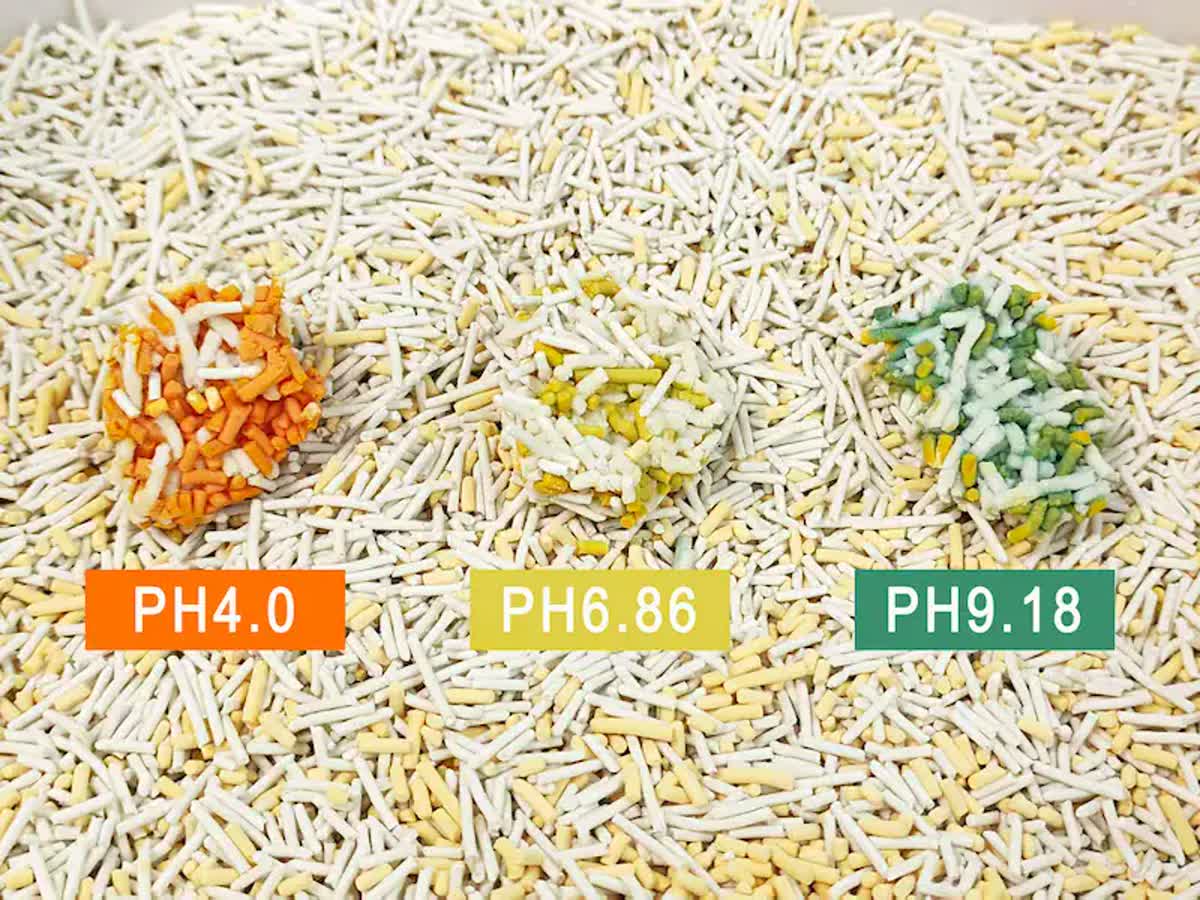
Tofu-based health monitoring litter: pH 4.0 acidic reaction (orange), pH 6.86 healthy (yellow), pH 9.18 alkaline reaction (green)
Color response of the indicator granules to standard pH buffer solutions: pH 4.0 (acidic, orange), pH 6.86 (healthy, yellow), pH 9.18 (alkaline, green).

Cassava Base — Fine Granule Reaction Test

pH 6.86 / 9.18 standard buffer solutions on fine indicator granules blended with cassava litter.

Tofu Base — Tofu-Style Granule Reaction Test

pH buffer solutions on tofu-style indicator granules blended with tofu litter.
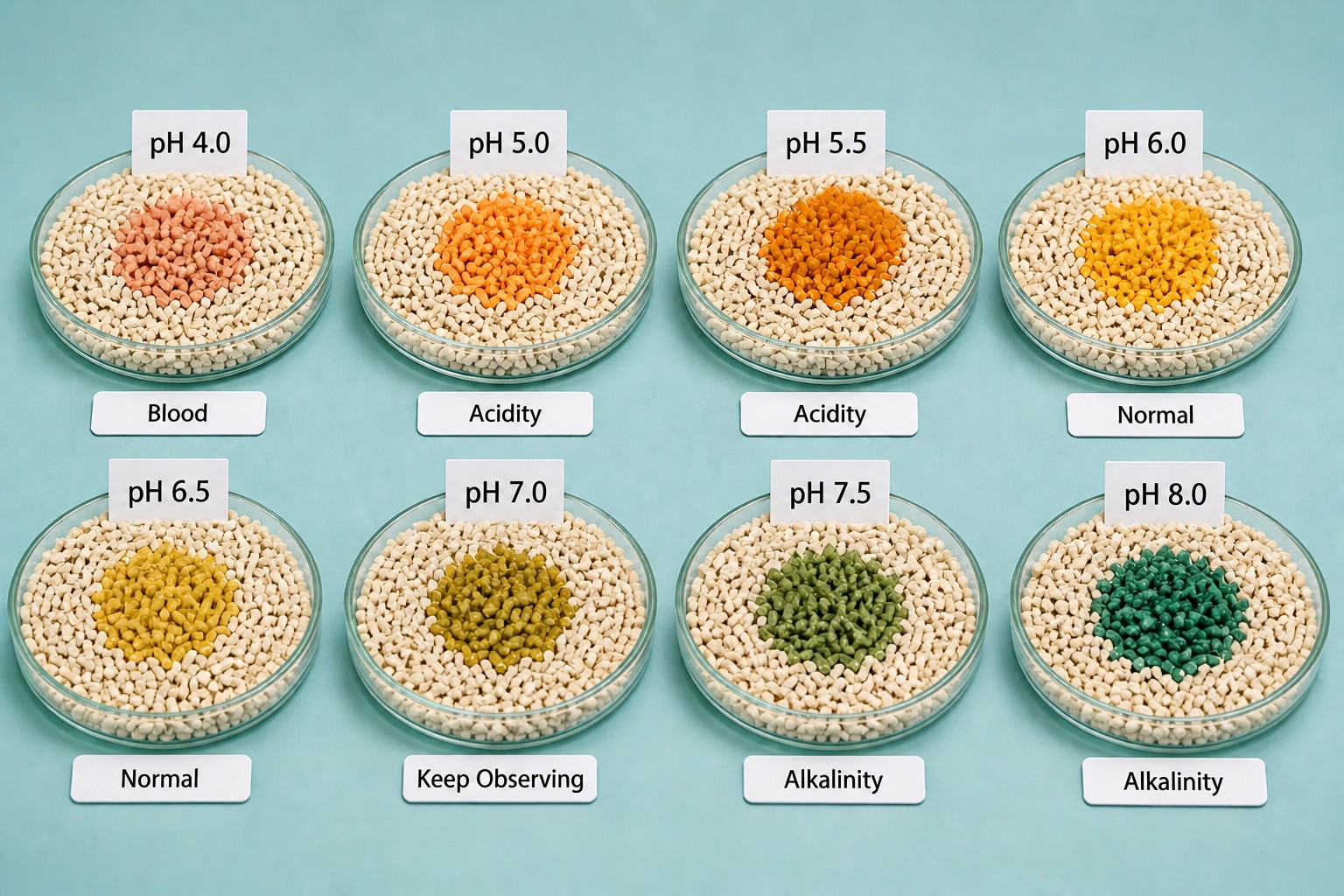
Health Monitoring Color Chart: What the Colors Mean

Reference ranges below follow standard feline urine chemistry guidance (normal urine pH for cats is approximately 6.0–7.0). The chart translates a color change into a readable health signal. A single abnormal reading is not a diagnosis — persistent or worsening trends are what matter, and any concern should be confirmed by a veterinarian.

Health monitoring cat litter color chart: pH 4.0 to 8.0 indicator granule reactions in petri dishes, from acidic pink-orange to alkaline dark teal
Indicator granule color response across the pH range: acidic (pH 4.0–5.5) shifts pink-orange, healthy (pH 6.0–6.5) stays yellow, alkaline (pH 7.0–8.0) shifts green to dark teal.
ColorLevelPossible IndicationsRecommended Action
Pale Yellow HEALTHY — normal urine pH range (6.0–7.0) Maintain current diet and care. No action needed.
Orange ACIDIC TREND — urine pH trending low; early calcium oxalate risk Encourage water intake. Re-test within 2–3 days. See a vet if the trend persists or symptoms appear.
Red CRITICAL ACIDITY — severe acidification; calcium oxalate stone risk Immediate veterinary attention recommended.
Light Blue ALKALINE TREND — urine pH rising; early struvite risk Encourage water intake. Re-test within 2–3 days. See a vet if the trend persists.
Blue ALKALINE — struvite crystal / urinary tract infection (UTI) risk rising Veterinary evaluation recommended — struvite can progress to blockage, especially in male cats.
Blue-Green OCCULT BLOOD POSITIVE — microscopic blood (hematuria); possible stones, cystitis (FIC), or UTI Submit a urine sample for professional urinalysis promptly.

Technical Specifications

ParameterSpecification
Detection ParametersUrine pH + occult blood (TMB chromogenic method)
Base MaterialsCassava base (premium) or tofu base (value) — white/off-white, food-grade
Indicator Granule OptionsOption A: fine granules (for cassava, premium line); Option B: tofu-style granules (for tofu, value line)
Granule MaterialFood-grade starch, plant fiber, encapsulated color-developing reagents
Reaction Time & Color RetentionReacts within 1 second; color locks 24 hours (full litter) / 48 hours (additive granules)
Normal Urine pH RangepH 6.0–7.0 (readings outside this range trigger a color alert)
Reaction ValidationCalibrated against standard pH buffer solutions (pH 4.0 / 6.86 / 9.18); demonstration videos and photos available
Color Reference RangePale yellow = healthy (pH 6.0–6.5); orange/red = acidic; light blue/blue = alkaline; blue-green = occult blood positive
Safety TestingFood-grade, non-toxic, encapsulated reagents. OECD 423 oral toxicity (negative), ISO 10993-10 skin irritation (negative)
Blend RatioTailored to your base formula — our team provides blending guidelines to preserve clump integrity and detection performance
Shelf Life12 months sealed; use within 30 days after opening for best readability
Packaging1.25–20 kg bags, Kraft / PE / vacuum brick, custom print; ton bag (bulk) available
MOQ18 tonnes (1×20'FCL); mixed containers available

B2B Buyer Tip: When comparing health monitoring litter suppliers, ask three questions: (1) What exactly does the granule detect — pH only, or pH + occult blood? (2) Can you show a video of the color reaction, validated with standard buffer solutions? (3) Is the reagent encapsulated and independently safety-tested? If a supplier cannot show the reaction, the product is a marketing claim.

What to Do When the Color Changes

Actionable guidance for your end customers — print-ready for your packaging or product page:

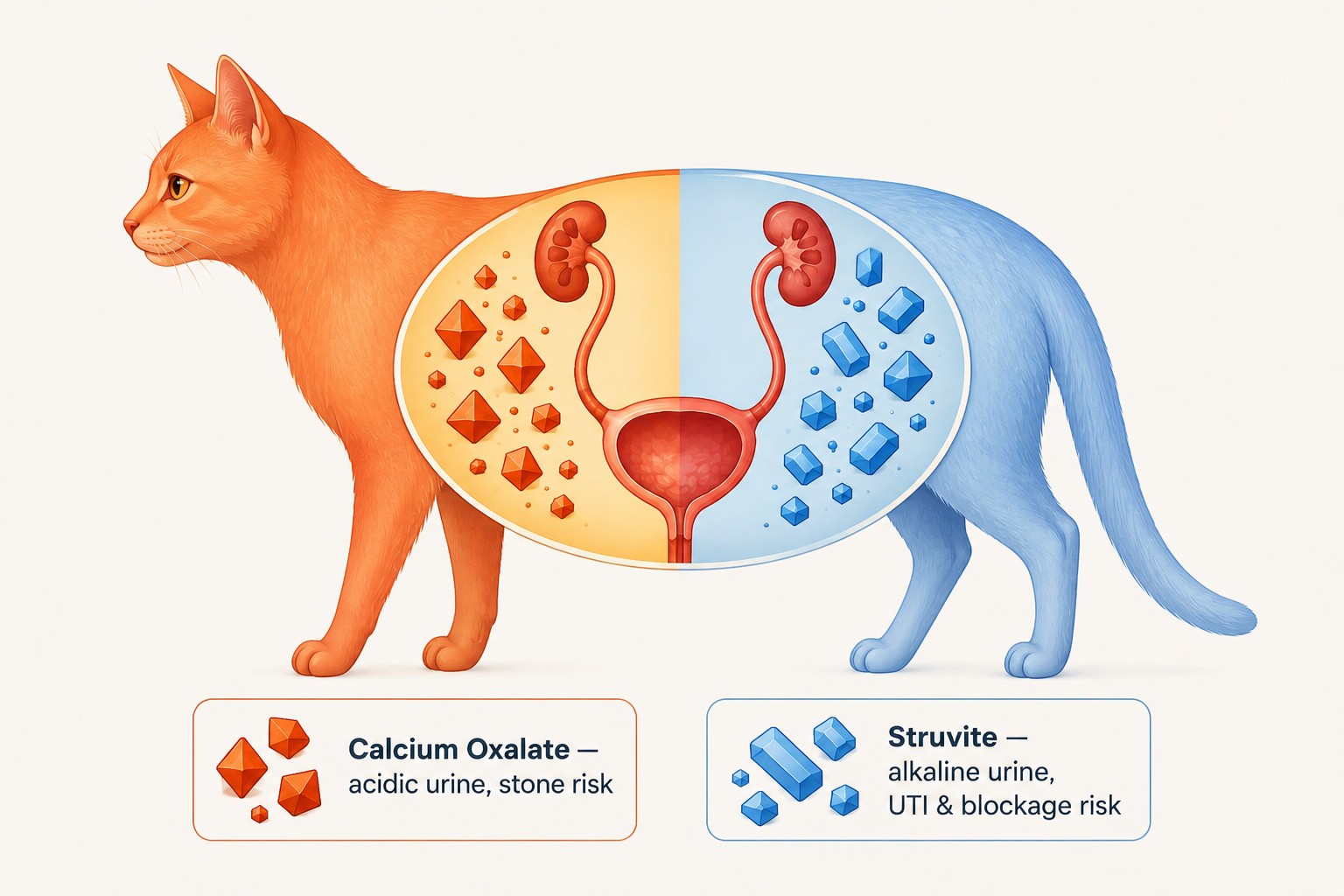
Feline urinary health guide: calcium oxalate crystals form in acidic urine, struvite crystals form in alkaline urine — the two conditions health monitoring litter screens for
What the screening is looking for: calcium oxalate crystals (acidic urine) and struvite crystals (alkaline urine, commonly linked to UTIs).

Abnormal color, but the cat seems fine

  1. Observe and re-test: wait 2–3 days and check again. A one-time fluctuation is normal; a consistent trend is the signal.
  2. Gather more data: track water intake, urination frequency, and appetite alongside the color readings.
  3. Consult a vet: if the abnormal reading persists, schedule a routine urinalysis.

Abnormal color with urgent symptoms — contact a veterinarian immediately

Important: Health monitoring litter is a screening tool, not a diagnostic medical device. Color changes indicate possible risk and are not a diagnosis. A definitive diagnosis requires professional veterinary urinalysis.

OEM & Private Label Health Monitoring Cat Litter

We build the product around your brand and your market. The variables you control:

We handle the full chain from formula confirmation to container loading. For a structured way to evaluate us against other suppliers, see our 8-Point factory verification framework, or read our guide on how to read a cat litter COA.

Market Opportunity: The Rise of Proactive Pet Care

Urinary tract problems are among the most common feline health issues — alongside kidney disease, they are the leading reason cats visit the vet — and most are treatable when caught early. Color-changing litter converts a daily routine — the litter box — into an early warning system, which is exactly why health monitoring litter commands a premium price tier in the markets where it has launched. For distributors, the SKU logic is simple: it is a higher-margin product that strengthens the rest of your plant-based range by association.

Ingredient & Evidence Disclosure

Every health monitoring order ships with the evidence pack an importer needs to verify the product and defend the label:

Evidence ItemStatus
Ingredient statement (base material, pH/blood reagent system, additives)Provided with quotation
Batch COA with test methods (density, moisture, dust, reagent reactivity, heavy metals)Per batch, with batch number
Moisture-content test and drying methodPer batch
Moisture-barrier packaging confirmationConfirmed at RFQ
Container loading plan (bulk density, bags per container)Provided with quotation

B2B Buyer Notes

Health-monitoring granules are plant-based with food-grade reagent indicators (pH and occult blood), tested to OECD 423 and ISO 10993-10. MOQ 18t per SKU; each batch ships with a COA covering reagent safety and color-readout consistency. Request the safety test summary with your first order.

Third-party reports are provided with the TDS on request. Where a document does not yet exist for a specific claim — including the reagent safety test — we say so rather than promise it.

Frequently Asked Questions About Health Monitoring Cat Litter

What is health monitoring cat litter and how does it work?

It is a plant-based litter with color-changing indicator granules mixed in. Urine contact triggers a color shift within 1 second, based on pH or occult blood, and the color locks for 24 hours so you can check it at any point in the day.

Can color-changing cat litter really detect urinary health problems?

It is a screening tool, not a diagnostic device. The reaction is validated with standard pH buffer solutions, and consistent abnormal readings are a reliable early warning that warrants veterinary urinalysis.

Which cats benefit most from health monitoring litter?

Cats with a history of urinary disease, senior cats (7+ years), male cats (higher blockage risk), low-water-drinking cats, and multi-cat households where individual tracking is difficult.

Is health monitoring cat litter safe for cats?

Yes. All reagents are food-grade, non-toxic, and encapsulated. Independently tested: OECD 423 oral toxicity (negative) and ISO 10993-10 skin irritation (negative).

What do the color changes mean?

Pale yellow = healthy (pH 6.0–7.0). Orange/red = acidic trend to critical acidity (calcium oxalate risk). Light blue/blue = alkaline trend to alkaline (struvite/UTI risk). Blue-green = occult blood positive. See the full chart above.

Can I add the indicator granules to my existing litter formula?

Yes. Fine granules blend cleanly with cassava for a premium line; tofu-style granules match tofu for a value line. We provide blending guidelines so clump integrity and detection both hold.

Can health monitoring litter be used in automatic litter boxes?

Compatibility depends on the system — sifting and rotating systems that move waste immediately may hide the reading. Tell us your target model and we will recommend the right granule size and formula.

What is the MOQ and sample policy?

Standard MOQ is 18 tonnes (1×20'FCL), with free samples in 5–7 days and mixed-container options for market testing.

Related Products

Compare All 6 Product Lines →
Get Started

Request Free Samples & Wholesale Quote

Tell us your target market and base material preference (cassava premium or tofu value) — samples ship in 5–7 days.

We respect your privacy. No spam, ever.