What Is Cassava Cat Litter?
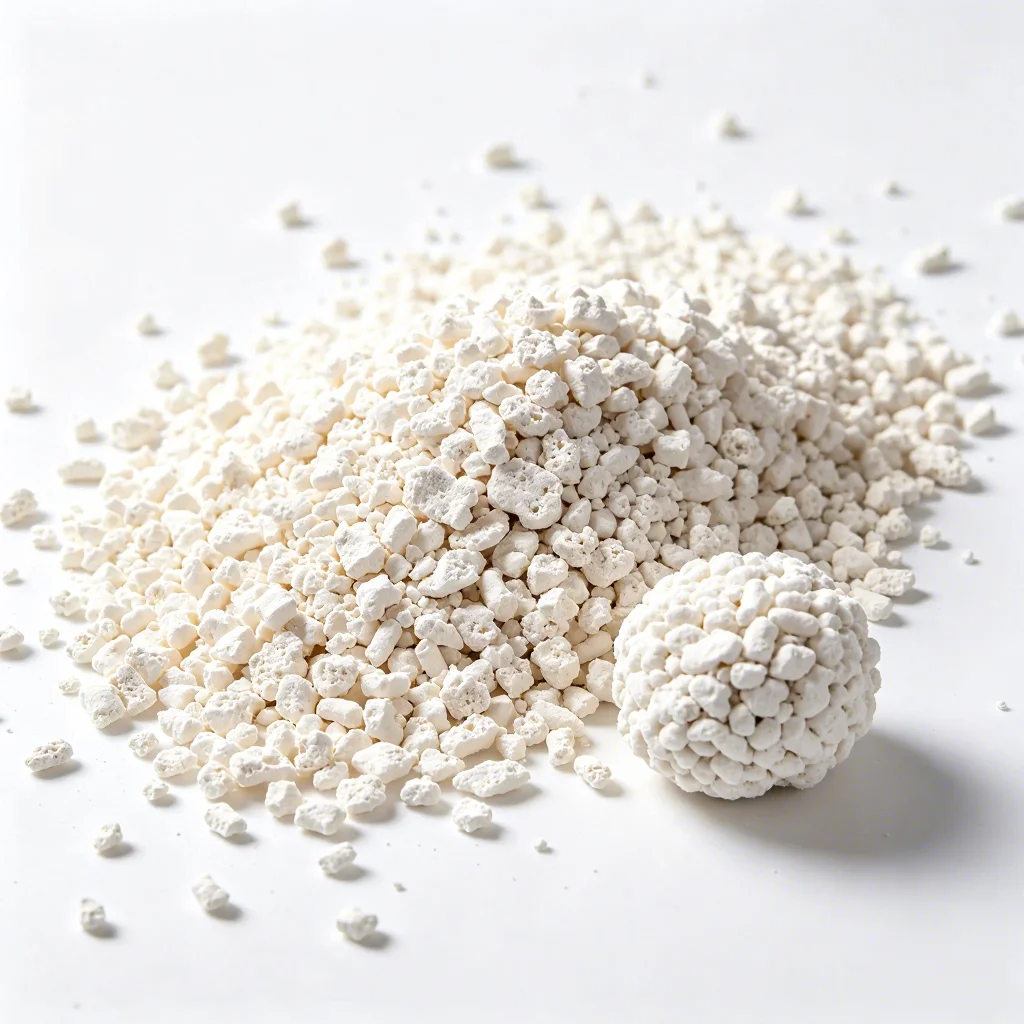
Cassava cat litter (also called tapioca cat litter) is a plant-based litter made from the starch and fiber of the cassava root (yuca/manioc). Because it is soy-free, wheat-free, and corn-free, it is the preferred premium choice for allergy-aware households — and it is naturally white, giving the litter box a clean, high-end look that photographs well for e-commerce.
The science: cassava's high starch content delivers dense, fast clumping (≤4 seconds) and exceptional absorption, while the lightweight granules (0.60 kg/L) keep freight costs low per unit sold. It does not flush like tofu litter — but it outperforms most plant-based bases on clump strength and visual cleanliness, which is why we position it as the soy-free premium route (paired with our fine health monitoring granules for a flagship health line).
Automatic Litter Box Compatibility
Clumping cassava litter works with scoop-style and rake-style automatic boxes that separate solid clumps. Its dense, uniform granules sieve cleanly, and the white color makes the mechanism's cleaning cycle visually obvious for owners. If your target box is a rotating or sifting model, tell us the model and we will confirm granule compatibility before sampling.
Technical Performance: Why Choose Cassava?
Cassava (also known as yuca or manioc) is a high-starch root crop. When processed into cat litter, it creates a super-dense granule that absorbs liquid instantly upon contact. Unlike tofu litter which uses fiber, cassava litter relies on its high starch content for clumping strength. It is naturally off-white/light-yellow, extremely lightweight (0.60 kg/L), and produces zero airborne dust during pouring.
| Parameter | Specification | Test Method |
|---|---|---|
| Base Material | Natural Cassava Starch | Ingredient Declaration |
| Granule Shape | Irregular Granular (Crushed) | Visual Inspection |
| Water Absorption Rate | ≥300% | Gravimetric Absorption |
| Clumping Speed | ≤4 seconds | 50ml Water @ 25°C |
| Dust Content | ≤0.05% | 5-Stage Filtration |
| Odor Control Duration | 7–10 days (single cat) | Ammonia Headspace GC |
| Moisture Content | ≤8% (anti-mold standard) | Oven Dry @ 105°C |
| Bulk Density | 0.58–0.65 g/cm³ | Tapped Density Method |
| Pellet Hardness | ≥45N | Crush Resistance Test |
| Soy Content | 0% (Soy-Free) | Allergen Verification |
| Flushability | ⚠ Not Recommended | Plumbing Safety Standard |
| Packaging | 1.25–20 kg bags, custom print; ton bags available | — |
| MOQ | 18 tonnes (1×20'FCL) | — |
B2B Buyer Tip: Cassava litter is the fastest-growing "soy-free" alternative for premium markets in North America and Europe. While it clumps as fast as bentonite and absorbs more than tofu, it does not dissolve in water as readily as pea-fiber tofu litter. Therefore, we do not recommend labeling cassava litter as "flushable" for urban apartment markets with sensitive plumbing.
Watch the Cassava Clumping Test
Watch how cassava starch particles bond instantly to trap moisture and odor.
Product Details & Packaging
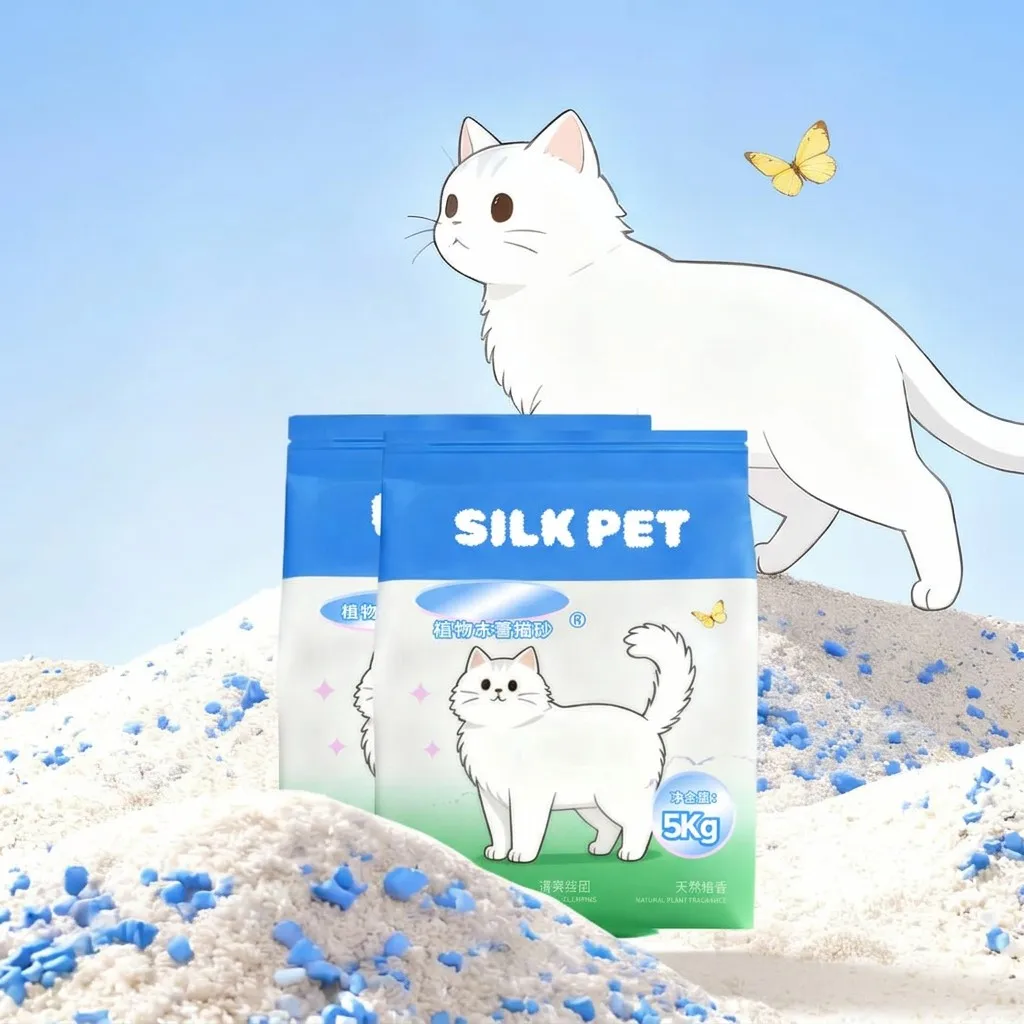
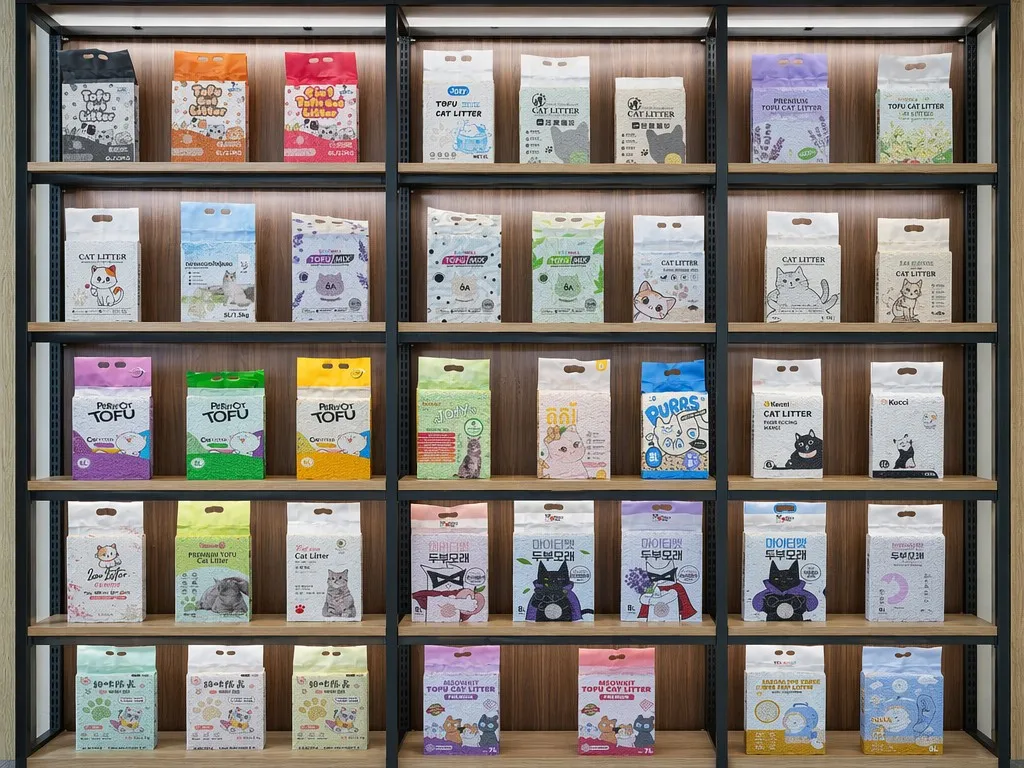
We provide full OEM support for cassava litter, from small consumer pouches to bulk industrial ton bags. Our packaging is designed for humidity resistance to ensure shelf stability in all climate zones.
The Strategic Advantage of Cassava Cat Litter
For distributors and brand owners, cassava litter represents a high-margin premium SKU. While bentonite is the volume anchor and tofu is the eco-mainstream, cassava targets the most discerning cat owners who prioritize:
- Soy-Free Safety: As pet humanization increases, consumers are becoming more aware of potential allergens. A soy-free plant-based litter allows you to capture the market segment that avoids soy-based products for health or philosophical reasons.
- Unmatched Absorption: Cassava starch can absorb up to 3-4 times its own weight in liquid. This means a 10kg bag of cassava litter lasts significantly longer than 10kg of bentonite, creating a "Value Per Use" selling point that justifies a premium retail price.
- Near-Zero Dust: Our 5-stage filtration ensures a dust rate of ≤0.05%. This is the gold standard for cats with feline asthma or owners with allergies.
Cassava + Health Monitoring: The Flagship Premium Line
This is the combination we recommend to brands building a differentiated premium portfolio: cassava base + fine pH detection granules. Because cassava is naturally white and its granules are uniform, the color-changing health monitoring signal stands out with maximum contrast — and the soy-free allergen profile reinforces the "health" positioning from two directions at once.
The logic for retailers: the health monitoring segment justifies the highest price per kilogram in the cat litter aisle, and cassava's premium appearance supports that price on shelf. For veterinary channels, a cassava health-monitoring line pairs the urinary-health screening story with a base that is gentle on allergy-prone cats. See the full technical details on our health monitoring cat litter page.
Who Should Stock Cassava: Channel Fit
- E-commerce brands: the white, photogenic product and allergen story convert well in listings; lightweight (0.60 kg/L) keeps per-order shipping cost low.
- Pet specialty retail: soy-free and near-zero dust are shelf-talking points that justify the premium price in person.
- Veterinary clinics: low-dust formula suits respiratory-sensitive cats; pairs with the health monitoring line for urinary screening.
- Allergy-community channels: a genuinely soy-free, corn-free, wheat-free formula — verified, not just claimed.
Quality Verification: What a Cassava COA Should Show
Not all Certificates of Analysis are equal. For cassava litter, the four indicators that matter on the COA are water absorption (≥300% gravimetric), dust content (≤0.05% via air-jet), moisture (≤8% anti-mold), and microbiological safety (for a food-adjacent plant material). A supplier whose COA shows only clumping speed is not telling you enough. For a full walkthrough of the eight COA indicators and how to verify lab credibility, see our cat litter COA guide.
Honest Product Assessment: Cassava vs. Other Cat Litters
✅ Why brands build a premium line around cassava
- Super absorption — ≥300% of its own weight, extending bag life vs. bentonite
- Soy-free, wheat-free, corn-free — the allergen-aware premium segment
- Near-zero dust (≤0.05%, 5-stage air-jet filtration) — asthma/allergy friendly
- Naturally white — clean aesthetic that photographs well for e-commerce
- Lightweight (0.60 kg/L) — lower freight cost per unit sold
⚠️ What to know before you commit
- Not flushable — do not label it flushable for sensitive plumbing markets
- Higher cost per kilogram than bentonite — premium positioning required
- Plant starch supply is more concentrated than clay — verify supplier's raw material stability
- Less established category awareness than tofu in Japan/Korea/UK
Four Engineered Advantages That Sell Themselves
1. Food-Grade Starch Purity — the Clumping Difference
We source only food-grade cassava starch. Cheap industrial-grade starch clumps weakly and crumbles in transit; food-grade starch bonds densely, which is why our clumps hold at ≥45N crush resistance.
2. ≥300% Water Absorption — a Bag That Lasts Longer
Cassava's starch network absorbs 300%+ of its own weight (gravimetric test). A 10kg bag lasts visibly longer than the same weight of bentonite — the "value per use" argument that justifies the premium price.
3. 5-Stage Air-Jet Filtration — ≤0.05% Dust
Surface fines are stripped in five filtration stages, holding dust at ≤0.05% — the reference standard for households with feline asthma or owner allergies.
4. Anti-Mold Moisture Control (≤8%)
Moisture is held at ≤8% with anti-mold processing, so the product survives long sea freight and humid warehouse storage without caking or odor drift. Shelf life: 24 months sealed.
Comparison: Cassava vs. Tofu vs. Bentonite
| Feature | Cassava | Tofu | Bentonite |
|---|---|---|---|
| Allergen Profile | ✅ Soy-Free | ⚠ Contains Soy | ❌ Mineral |
| Absorption | ⭐⭐⭐⭐⭐ 300%+ | ⭐⭐⭐⭐ 400% (Fiber) | ⭐⭐ 200% |
| Weight (kg/L) | 0.60 (Lightweight) | 0.55 (Lightweight) | 0.95 (Heavy) |
| Flushable | ⚠ Not Recommended | ✅ Yes (Dissolves fast) | ❌ No |
| Clumping | Hard & Tight | Firm | Rock-Hard |
| Best Markets | USA, Canada, Europe | Japan, Korea, UK | Middle East, Africa |
| Price Tier | Premium / High-Margin | Eco-Premium | Standard / Volume |
Cassava vs. Tofu vs. Corn — Choosing a Plant-Based Base
If you are entering the plant-based category, the base material decision shapes everything downstream — clump strength, flushability claims, allergen profile, and shelf position. Here is how the three mainstream plant bases compare:
| Base | Clumping Mechanism | Flushable | Allergen Profile | Best Position |
|---|---|---|---|---|
| Cassava | High-starch density, hard tight clumps | Not recommended | Soy-free, corn-free | Premium soy-free / white aesthetic |
| Tofu (pea fiber) | Fiber bonding, firm clumps | Yes — dissolves fast | Contains soy | Eco-premium, flushable claim |
| Corn | Starch + fiber blend | Usually no | Contains corn | Budget plant-based entry |
The practical rule: if your market needs the flushable claim, tofu wins. If your market is allergen-aware and willing to pay for a soy-free white premium product, cassava is the better fit — and it pairs naturally with our fine health monitoring granules for a flagship health line.
Compare cassava cat litter with tofu and bentonite options before you commit: our Cassava vs Tofu vs Corn material comparison walks through formula disclosure, bulk density per container, moisture control, test methods and COA consistency — the criteria that decide your container economics.
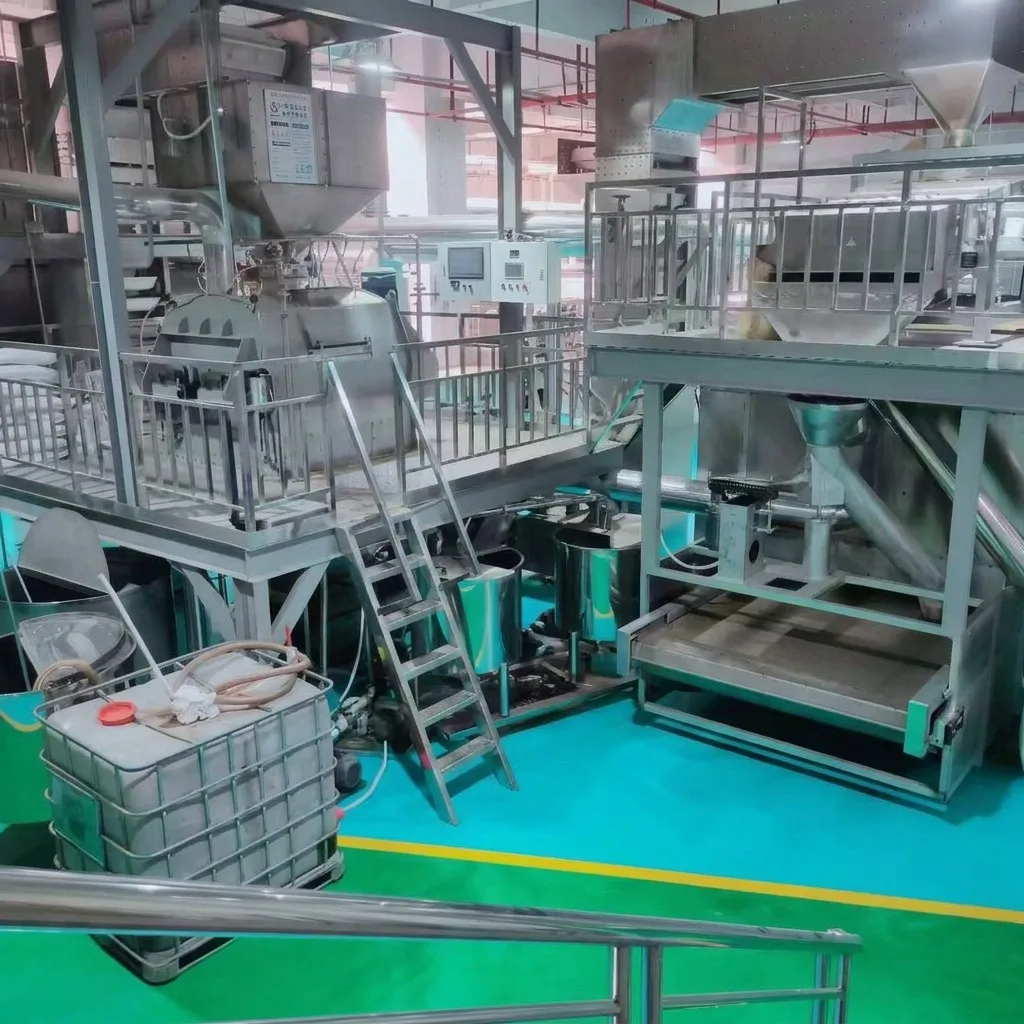
Manufacturing & Quality Control
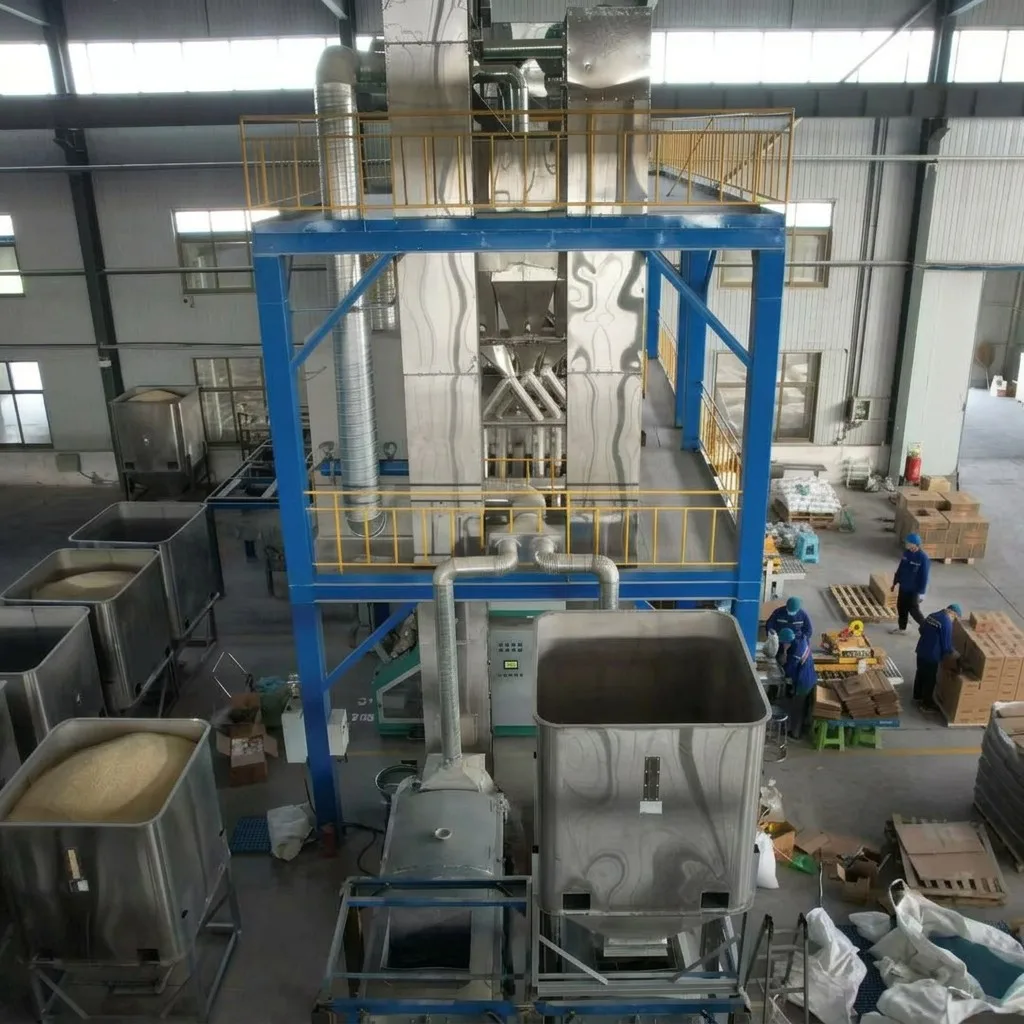
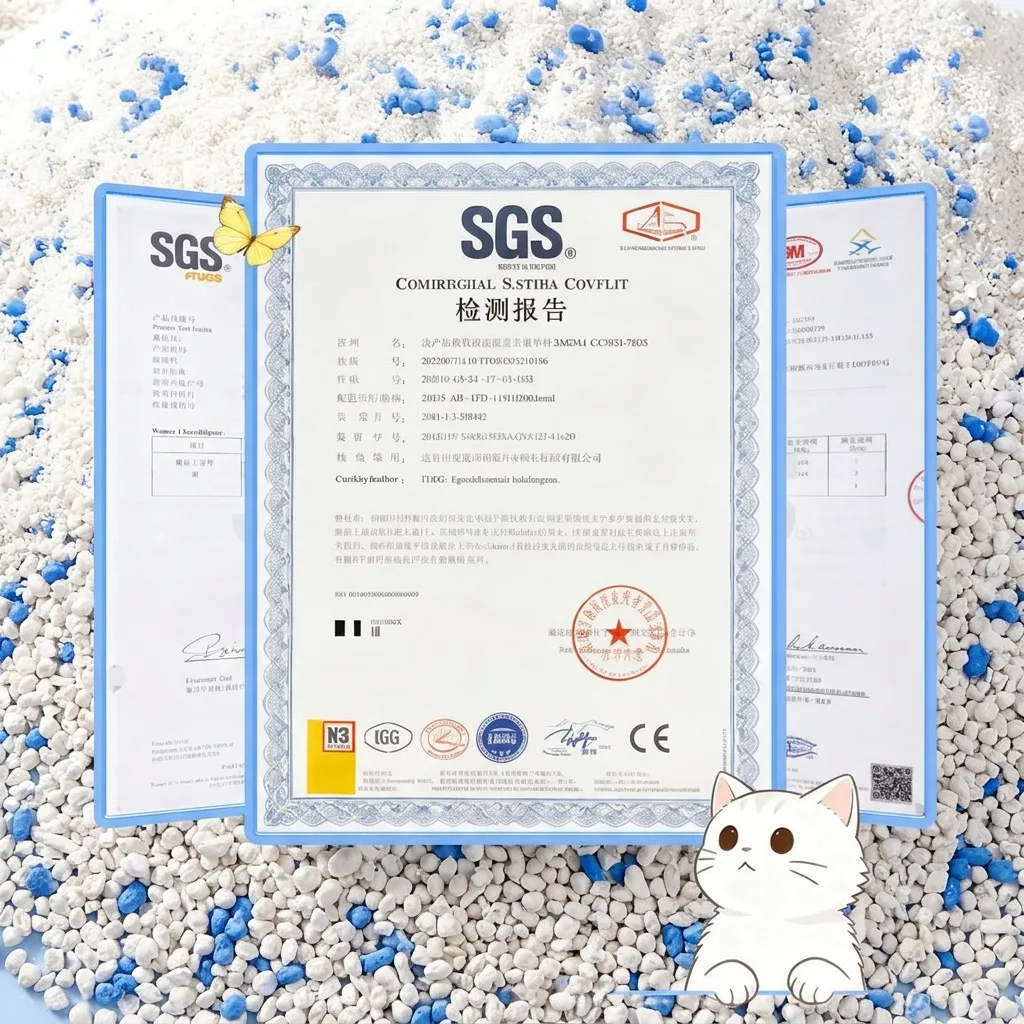
Our facility operates under ISO 9001 management. Every batch of cassava cat litter undergoes rigorous testing before shipment. Learn how to verify cassava cat litter quality from a Certificate of Analysis:
- Starch Purity: We source only food-grade cassava starch to ensure consistent clumping performance.
- Dust Control: 5-stage air-jet filtration removes all surface fines.
- COA Issued: Every production run issues a Certificate of Analysis covering absorption, dust, and microbiological safety.
- Logistics: Proximity to Tianjin and Qingdao ports reduces inland freight costs and ensures fast turnaround for global shipments.
Container Loading & Logistics — Transparent Numbers
Cassava's light density (0.58–0.65 g/cm³) means a 20ft container carries 18 tonnes, and the load math works in your favor on freight: lighter product per volume than bentonite, so landed cost per unit sold stays competitive despite the higher FOB price.
- Standard load: 18T per 1×20'FCL; packaging from 1.25kg pouches to 20kg bags and bulk ton bags.
- Mixed containers: combine 9T cassava + 9T tofu (or other plant lines) in one 20ft to test multiple SKUs with one shipment.
- Ports: loaded at Tianjin or Qingdao — short inland haul from our facility, with humidity-resistant packaging for long sea routes.
- Documentation: batch COA, packing list, SGS inspection on request — the same transparency we publish on freight cost breakdowns.
Ingredient & Evidence Disclosure
Every cassava order ships with the evidence pack an importer needs to verify the product and defend the label:
| Evidence Item | Status |
|---|---|
| Ingredient statement (cassava starch/fiber, binder, additives) | Provided with quotation |
| Batch COA with test methods (density, moisture, dust, clumping, heavy metals) | Per batch, with batch number |
| Moisture-content test and drying method | Per batch |
| Moisture-barrier packaging confirmation | Confirmed at RFQ |
| Container loading plan (bulk density, bags per container) | Provided with quotation |
B2B Buyer Notes
For importers comparing cassava suppliers, the numbers that matter: bulk density 600-650 g/L (18t per 20GP), moisture <8% at packing (>10% is a freight red flag), clumping ≤4s, dust ≤0.1% (ISO 8130). Every batch ships with a COA tied to its batch number - request the batch COA, not a generic spec, before you sign.
Third-party reports are provided with the TDS on request. Where a document does not yet exist for a specific claim, we say so rather than promise it.
Frequently Asked Questions About Cassava Cat Litter
Is cassava cat litter flushable?
While cassava is 100% biodegradable and plant-based, it does not dissolve in water as rapidly as pea-fiber tofu litter. To prevent any plumbing risks for your end customers, we do not recommend marketing cassava litter as flushable. It is best suited for composting or traditional disposal.
What is the shelf life of cassava litter?
When stored in a cool, dry place in its original sealed packaging, cassava cat litter has a shelf life of 24 months. Our moisture-barrier packaging (PE laminate or vacuum bricks) ensures the product stays fresh during long-distance sea freight and warehouse storage.
Can we mix cassava and tofu in one container?
Yes. Tofu and cassava are produced in the same facility, making them perfect candidates for mixed-container loading. You can combine 9T of tofu and 9T of cassava in a single 20-foot container to test two premium categories with one shipment.
Which packaging sizes do you offer for OEM?
We offer full customization from 1.25kg small pouches to 20kg large bags. For bulk industrial buyers, we also provide ton-bag (jumbo bag) shipping options. Packaging materials include Kraft paper, PE laminate, and vacuum-sealed brick packs for maximum space efficiency.
What makes your cassava litter different from competitors?
Our advantage is starch purity and filtration. Many cheap cassava litters use lower-grade industrial starch which clumps weakly. We use food-grade cassava starch and a 5-stage dedusting process that results in a cleaner, higher-performing product that commands customer loyalty.
Is cassava litter dust-free enough for cats with asthma?
Yes. Our 5-stage air-jet filtration holds dust at ≤0.05%, which is the reference standard for households with feline asthma or owner allergies. Cassava is also soy-free and corn-free, removing the most common plant allergen triggers from the formula.
Cassava vs. corn cat litter — which should a brand choose?
Both are plant-based, but cassava is the premium option: higher absorption (300%+ vs. typical corn formulas), a cleaner white appearance, and a soy-free/corn-free allergen profile. Corn litter usually competes on a lower price point. Choose cassava when your shelf position is premium, corn when you need a budget plant-based entry.
How does cassava litter ship — can I mix it with other products?
Yes. Standard load is 18T per 1x20'FCL, and mixed-container loading lets you combine 9T cassava + 9T tofu (or other plant lines) in one container to test multiple SKUs. Loaded from Tianjin or Qingdao with full COA and packing documentation.